CombatChapter the Eighth
In this chapter
- Chapter 8 - Combat
- Combat
- Combat modifiers and example
- Surprise and initiative
- Movement
- Difficult ground; What slows a character down
- The combat round
- Advanced actions
- Combat modifiers
- Range and distance
- Weapon ranges; Shooting up close; Cover
- Firearms
- Outnumbering; Knockdown and prone
- Unarmed combat
- Fighting with two weapons
- Higher ground and fighting from horseback; Disarming

Combat
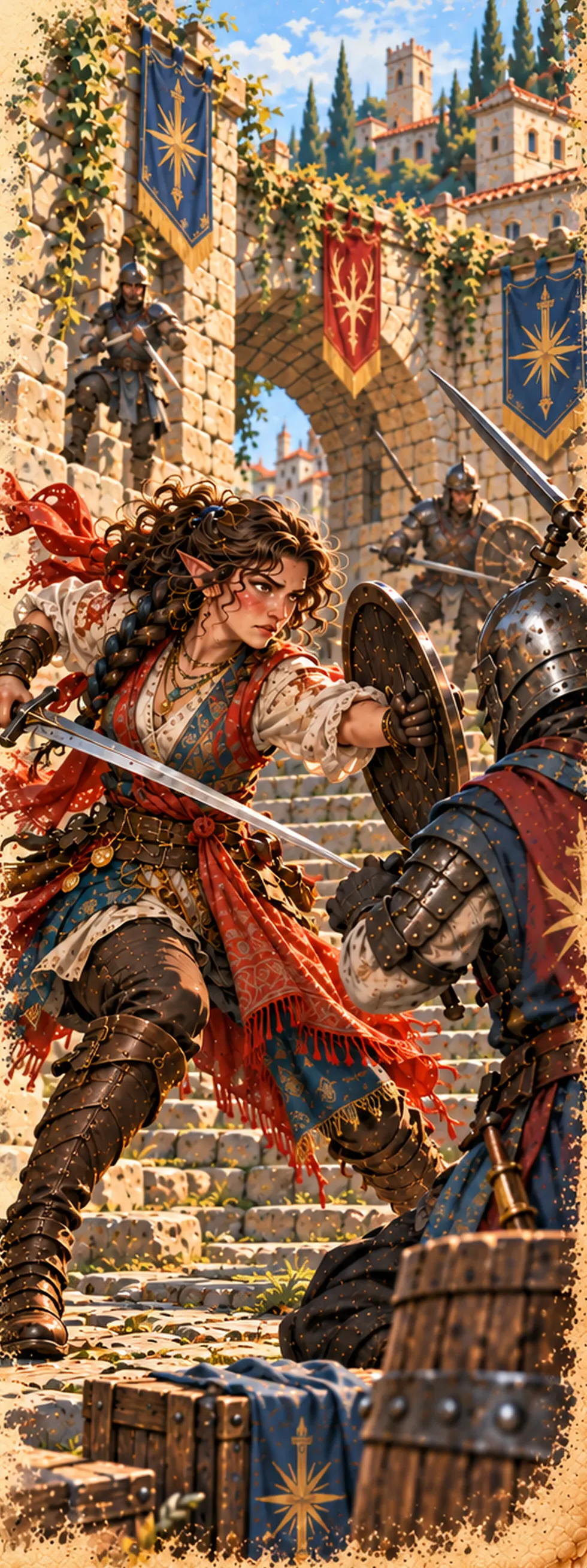
An attack is 3d6: two dice for the roll and a third of another colour for hit location.
Initiative: combatants act in order of Agility, highest first, and keep that order for the whole fight. Ties go to higher Wits, then to player characters, then act simultaneously.
Attack: roll 2d6 + Melee Skill or Ranged Skill + rank in the weapon's group, less Fatigue, against the target's Melee or Ranged Defence. Equal or higher hits, and the amount over the Defence is the margin of success.
Hit location: read the third die on the table below. It never counts toward the total or toward doubles.
Damage: weapon Damage + Might, or Agility up to the weapon's own Damage for most ranged weapons and melee weapons marked Agility, + margin of success, minus the target's Endurance and the armour value at that location. What is left comes off the target's Wounds.
Critical hit: a hit on doubles deals double the weapon's Damage, before anything is added. Endurance and armour apply as normal. It can happen on any hit, whatever the total.
| Location die | Location |
|---|---|
| 1-2 | Legs |
| 3 | Arms |
| 4-5 | Body |
| 6 | Head |

Piercing: the weapon ignores 2 points of armour.
Might adds to melee damage, and to damage from ranged weapons marked Might in the weapon table, with no limit.
Agility adds to damage from bows, slings, thrown weapons and melee weapons marked Agility, but never more than the weapon's own Damage. A knife (Damage 2) adds 2 at most, and a longbow (Damage 4) adds 4 at most. A critical hit does not raise this limit. A melee weapon marked Agility adds Might instead when Might is higher.
Crossbows, firearms and artillery add neither.
On the sheet, each location's Value box holds armour value + Endurance, the full amount taken off a hit there.
Armour value diagram
Labelled boxes pointing at a figure: Head Value, Arms Value, Body Value, Legs Value.
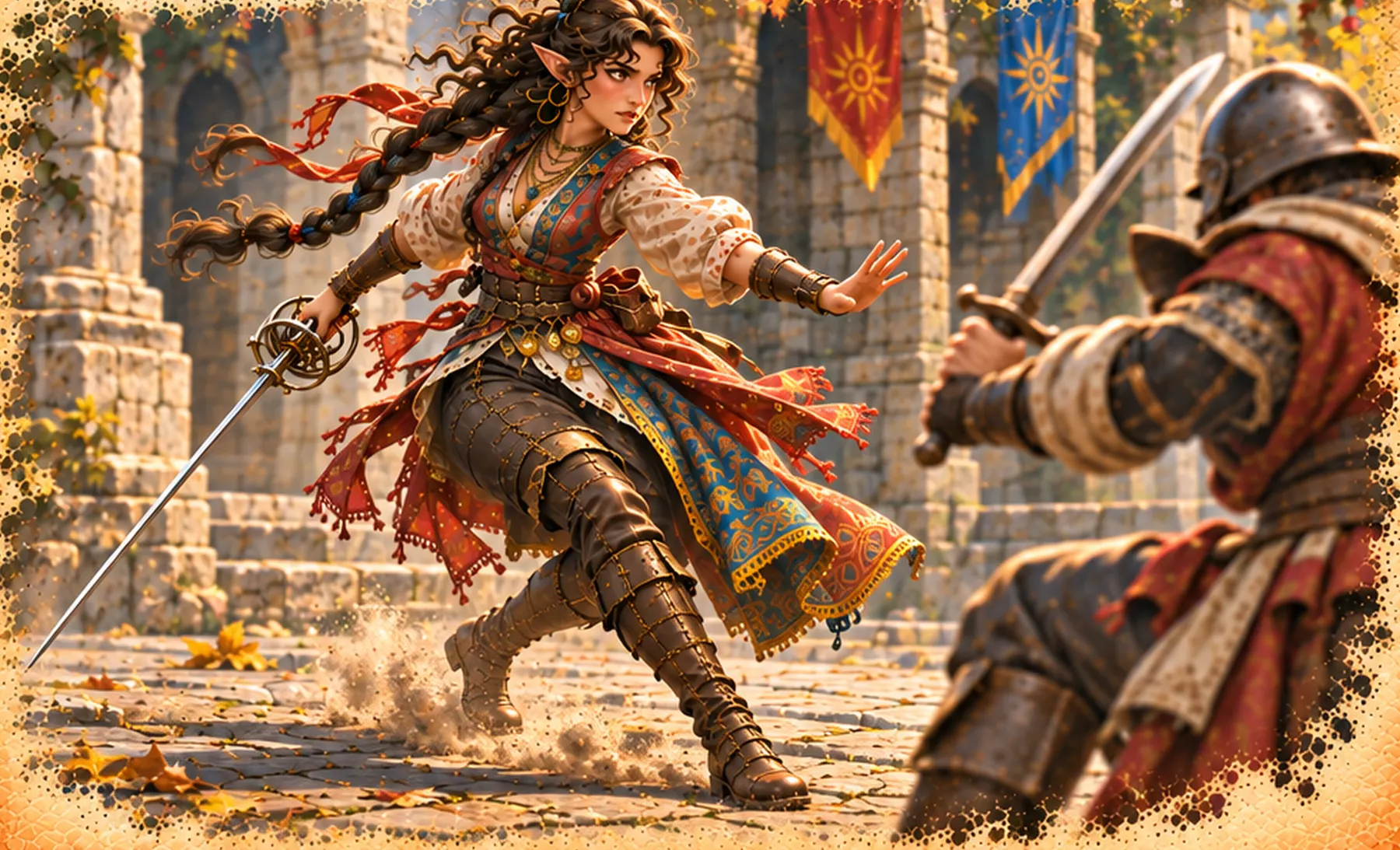
Example. Marguerite, a Duellist with Melee Skill 5, Might 2, Agility 5 and Melee (Basic) at Trained (+1), lunges at a raider with Melee Defence 10, Endurance 3 and a hide jerkin (armour 2 on the body). She rolls 4 and 5 on the attack dice, and 5 on the location die.
Her total is 9 + 5 + 1 = 15, which beats 10 by 5, so she hits the body with a margin of 5. Her smallsword is marked Agility, so she adds her Agility instead of her lower Might, but no more than the smallsword's Damage of 3. Damage 3, plus 3 for Agility, plus the margin of 5 makes 11. The smallsword is Piercing, so it ignores the jerkin's 2 points of armour, and only the raider's Endurance of 3 comes off. The raider loses 8 Wounds.
Had she rolled 4 and 4 instead, the hit would have been a critical: Damage 6 instead of 3, though Agility would still add only 3.
Surprise and initiative
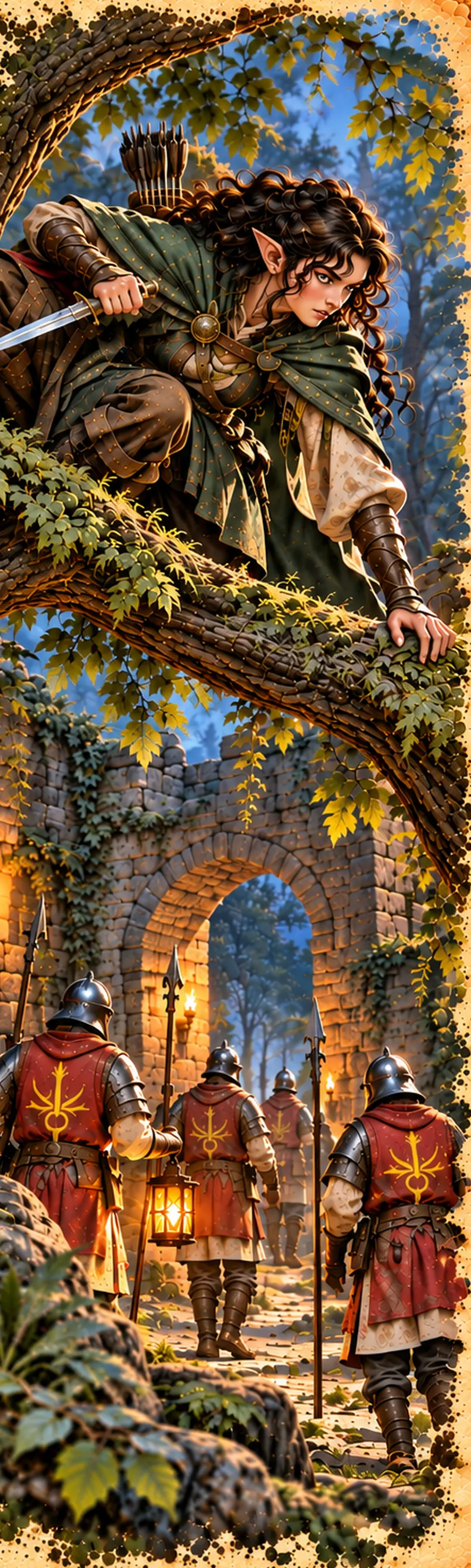
When a fight starts with a chance of surprise, the first round is rolled for.
The roll
Each character who might be surprised rolls a d6 and subtracts it from their initiative for the first round.
Below zero
A character whose result is below zero is surprised and loses their action for that round.
Zero or more
The character acts in the first round at the reduced number, which can be zero.
After the first round
Everyone acts on their normal initiative.
Who does not roll
The side springing the surprise acts on its normal initiative. A Master Woods Runner cannot be surprised and never rolls.
Combat Reflexes
Combat Reflexes adds its +1 before the d6 is subtracted.

Movement
Every character and creature has a Movement score: the number of paces it covers with one Move. For characters it is 3 + Agility, or 2 + Agility for halflings (see Derived values in chapter 1). A creature's Movement is given in its profile.
Paces and squares
A pace is 5 feet, or one square on a battle map.
Count every square as one pace, straight or diagonal. It is quicker at the table than measuring, and close enough.
Without a map, distances are given in bands: Melee, Near, Far, Long and Sight. Near is 6 paces, whatever a character's own Movement. See Range and distance.
Moving in a fight
| Action | Type | How far |
|---|---|---|
| Move | Half | Up to your Movement. Two Moves in one turn cover twice your Movement. |
| Run | Full | Up to twice your Movement. Ranged attacks against you are at -2 and melee attacks at +2 until your next turn. |
| Charge | Full | Up to your Movement in a straight line, at least 4 paces, then one melee attack at +1. |
| Disengage | Full | Up to your Movement away from foes in reach, without giving them a free attack. |
| Stand | Half | Get up from prone. |
| Crawl | Half | 1 pace while prone. |
Move twice or Run. Two Moves and a Run cover the same ground. A Run also makes the runner harder to shoot and easier to hit in melee until their next turn; two Moves do neither.
Moving and acting. A Move can come before or after the character's other half action, but a single Move cannot be split around it.
Leaving reach. A character who moves away from a foe in reach without Disengaging gives that foe one free melee attack. See Free actions and leaving reach.
Friends and foes. A character can move through a square held by an ally, but not end there. They cannot move through a square held by a foe who is standing and able to fight.

Difficult ground
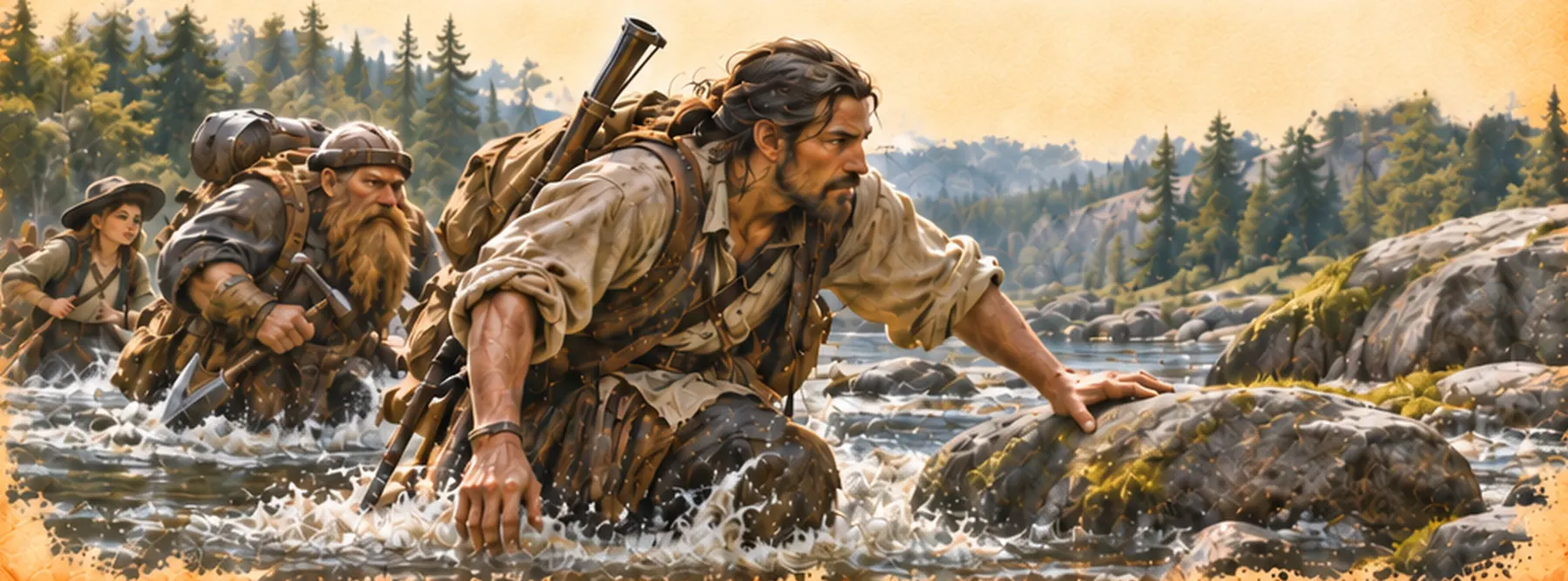
Some ground slows everyone down. Each pace of difficult ground costs 2 paces of Movement.
Difficult ground includes thick brush, deep snow, mud, loose scree, knee-deep water, a crowded room, a steep slope, a ladder or a ship's rigging.
Climbing a wall, cliff or rope that needs a roll costs 2 paces of Movement for each pace climbed, and needs an Athletics roll at the difficulty the GM sets. The Scale Sheer Surface talent applies.
Swimming costs 2 paces of Movement for each pace swum. Swimming in armour, or in rough water, needs an Athletics roll. River-Born and Strong Swimmer apply.
Jumping. A running jump clears a gap of paces equal to half the character's Might, rounded up, or a standing jump half that. Jumping further, or higher than a pace, needs an Athletics roll.
What slows a character down
Armour. Some pieces of armour take 1 off Movement; see Armour in chapter 6. The Sturdy talent and an Ease-rune reduce or remove this.
Carrying too much. An overloaded character takes -2 Movement; see Carrying in chapter 13.
Wounds. Several critical wounds halve Movement or stop a character from Running or Charging; see Critical wounds in chapter 9.
Mounts. A rider moves with their mount's Movement instead of their own; see Higher ground and fighting from horseback.
Talents. Fleet Footed gives +1 Movement, and Flee! gives +1 Movement when running from danger.

The combat round
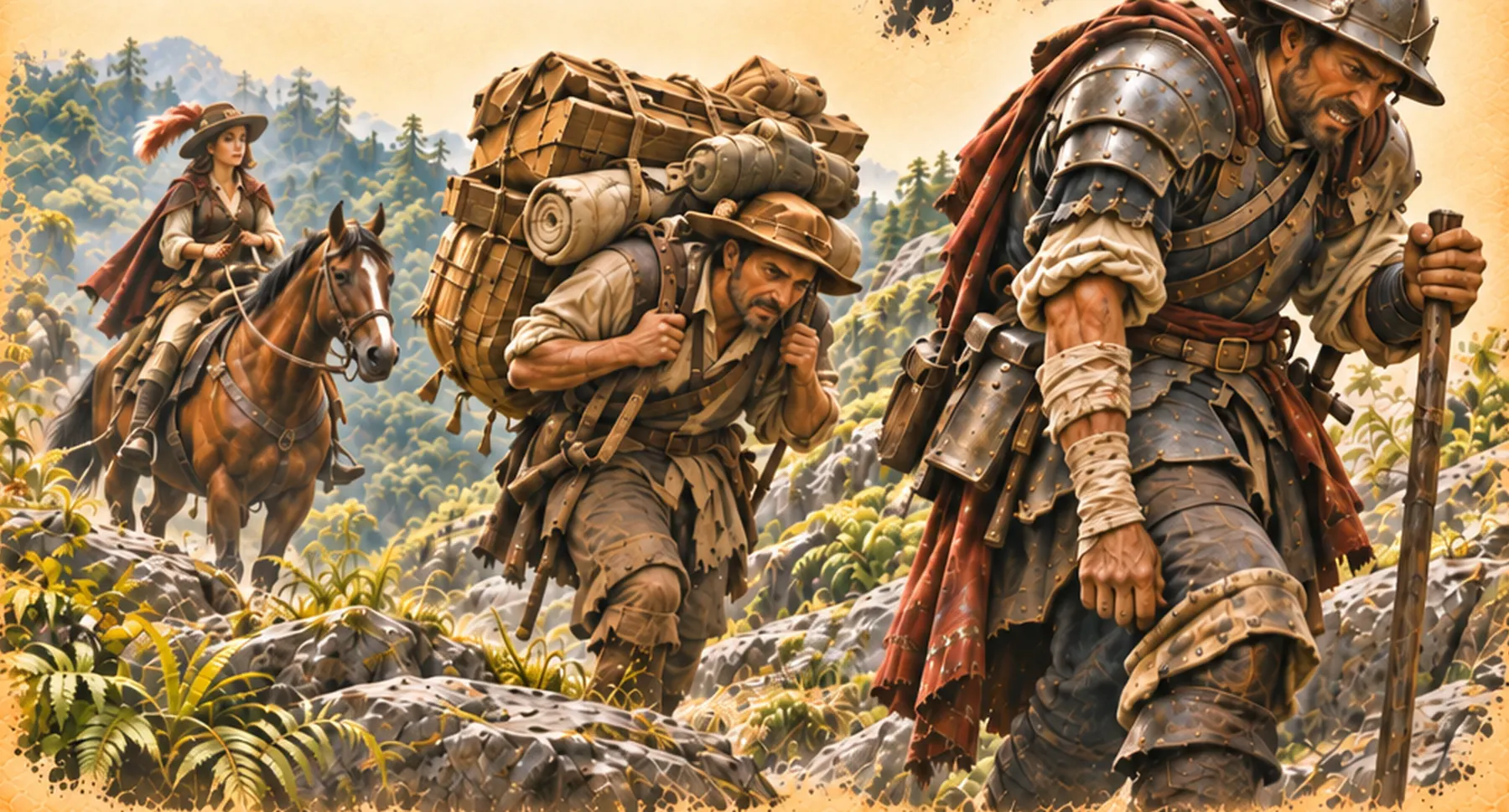
A round is a few seconds. Everyone acts once, in initiative order. On your turn you take one full action or two half actions, in any order, plus any free actions.
One attack action a turn. Standard Attack, Charge, Swift Attack, All Out Attack and Disarm are attack actions, and you may take only one of them on your turn.
One spell a turn.
Modifiers from these actions are not talents, so they add to a roll alongside one talent.
Basic actions
| Action | Type | What it does |
|---|---|---|
| Aim | Half | +1 to your next attack, if you make it this turn or on your next. |
| Cast | Half | Cast one spell. A ritual cannot be cast in a fight. |
| Charge | Full | Move up to your Movement in a straight line, at least 4 paces, and make one melee attack at +1. |
| Disengage | Full | Move up to your Movement away from foes in reach without giving them a free attack. |
| Move | Half | Move up to your Movement. |
| Ready | Half | Draw a weapon, pull out an item, or wake a rune. |
| Reload | Full | One round of reloading. A weapon is loaded when it has had the rounds shown in the weapon table. |
| Stand or mount | Half | Get up from the ground, or get on or off a mount. |
| Standard Attack | Half | One melee or ranged attack, or a grapple. |
| Swift Attack | Full | Two melee attacks, each at -2. If they go against two different foes, the second takes a further -1. Two weapons improve this; see Fighting with two weapons. |
| Use a skill | Varies | Half for something quick, full for something that takes care, such as picking a lock or treating a wound. |
Advanced actions
| Action | Type | What it does |
|---|---|---|
| All Out Attack | Full | One melee attack at +2. Until your next turn your Melee and Ranged Defence are 2 lower. |
| All Out Defence | Full | You make no attack. Until your next turn your Melee and Ranged Defence are 2 higher. |
| Delay | Half | Keep a half action in hand, to use at any point before your next turn. |
| Disarm | Full | Try to take or knock away a foe's weapon. See Disarming. |
| Feint | Half | Roll your melee attack total against your foe's. If you win, your next attack against them this turn is at +2. |
| Manoeuvre | Half | Roll your melee attack total against your foe's. If you win, you push them back one pace or change places with them. |
| Parrying Stance | Half | Until your next turn your Melee Defence is 1 higher. |
| Run | Full | Move up to twice your Movement. Until your next turn, ranged attacks against you are at -2 and melee attacks at +2. |
Free actions and leaving reach
- Free actions cost nothing: speaking a few words, dropping what you hold, falling prone.
- Leaving reach. If you move away from a foe who is within reach of you and you have not used Disengage, that foe makes one free melee attack against you at once.
- All Out Defence and Parrying Stance do not stack with each other. Use the better one. They do add to Defence from talents and shields, up to the Defence bonus limit of +2; see Combat modifiers.
Combat modifiers
Every situational modifier in this chapter, in one place. Separate modifiers add together. Talents, spells and critical wounds have their own modifiers and are not listed here.
To the attack roll
All attacks
| Situation | Modifier |
|---|---|
| Each point of Fatigue | -1 |
| Aim, on your next attack | +1 |
| Using a weapon group you lack | -1, or -2 if the group is advanced |
Melee attacks
| Situation | Modifier |
|---|---|
| Charge | +1 |
| All Out Attack | +2 |
| Feint won, your next attack on that foe this turn | +2 |
| Higher ground, or mounted against a foe on foot | +1 |
| Outnumbering: each attacker beyond the first in Melee range of the target | +1 each, to a maximum of +3 |
Swift attacks
| Situation | Modifier |
|---|---|
| Swift Attack, each of the two attacks | -2 |
| Swift Attack with two weapons | -1 main hand, -2 off hand |
| Second attack of a Swift Attack, made against a different foe | A further -1 |
Ranged attacks
| Situation | Modifier |
|---|---|
| Shooting one band beyond the weapon's range | -2 |
| Shooting at a distant target while a foe is in reach of you (not pistols or thrown weapons) | -2 |
| Shooting at a target who is in melee with an ally | -1 |
To the target's Defence
| Situation | Melee Defence | Ranged Defence |
|---|---|---|
| Target used All Out Attack | -2 | -2 |
| Target used All Out Defence | +2 | +2 |
| Target is in Parrying Stance | +1 | No change |
| Target is prone | -2 | +2 |
| Target is in light cover | No change | +1 |
| Target is in heavy cover | No change | +2 |
- All Out Defence and Parrying Stance do not add together, and cover and prone do not add together. Use the better in each case.
- Defence bonus limit. Bonuses to a Defence from talents, shields, All Out Defence, Parrying Stance, cover and being prone add together, but never by more than +2 in total. Use the best combination up to that limit. Penalties, such as being prone against a melee attack or using All Out Attack, are not limited and always apply in full.
- Size modifiers are already part of a creature's Defence. Size categories are listed in chapter 15, Creatures of the new world.
Range and distance
Distance is given in bands, for play without a map. On a map, one pace is one 5-foot square, and each band converts as shown.
| Band | In play | Squares | Feet |
|---|---|---|---|
| Melee | Within arm's reach | 1 (adjacent) | 5 |
| Near | Within one move | 2 to 6 | Up to 30 |
| Far | Within bowshot | 7 to 24 | Up to 120 |
| Long | A long shot across open ground | 25 to 60 | Up to 300 |
| Sight | Anything you can see | 61 or more | Over 300 |
A pace is one square, or 5 feet. Movement is in paces, so a character with Movement 6 moves 6 squares.
Near is fixed at 6 squares, whatever a character's own Movement.
At Melee range a fight uses Melee Skill against Melee Defence. A pistol fired at that range still uses Ranged Skill against Ranged Defence.
Touch, used for spells, means a target at Melee range that the caster lays a hand on.
"A few paces" in a spell or effect means within 2 squares of the point named.
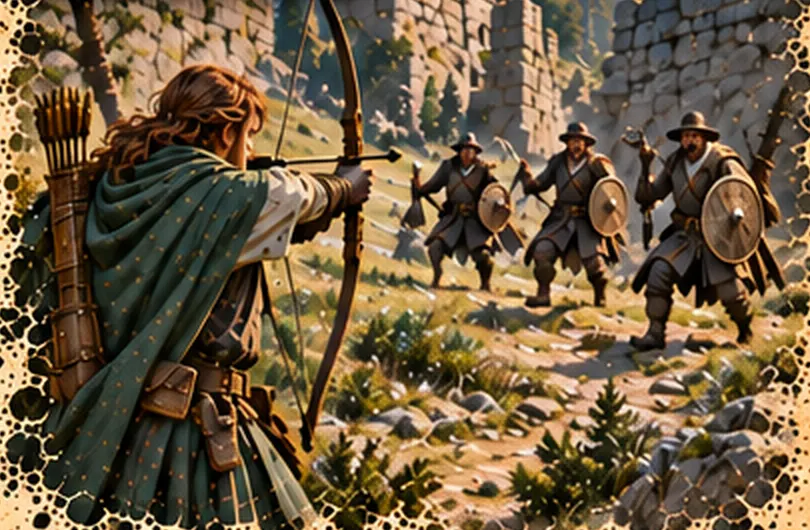
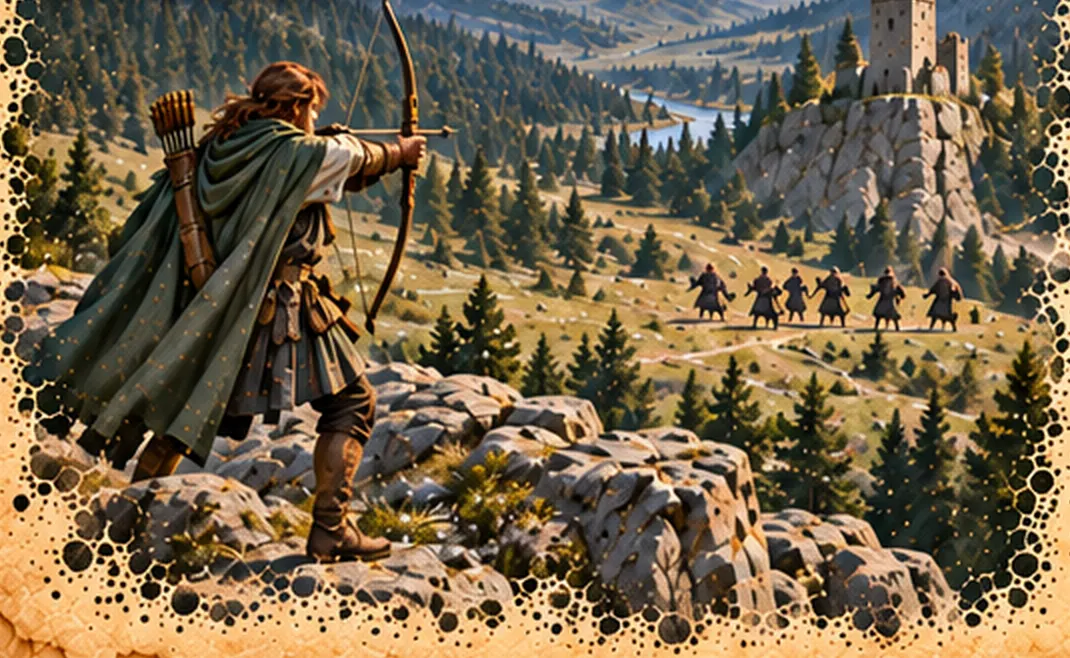
Picture captions: Melee (5 feet); Near (up to 30 feet); Far (up to 120 feet); Long (up to 300 feet); Sight (over 300 feet).

Weapon ranges
Each ranged weapon has a band, shown in the Range column of the ranged weapon table in Equipment. Within that band it shoots without penalty.
| Range | Weapons |
|---|---|
| Near | Thrown weapons, pistol, blunderbuss |
| Far | Sling, shortbow, composite bow, crossbows, muskets |
| Long | Longbow, long rifle, artillery |
Beyond its band. A weapon can shoot one band further at -2. It cannot shoot further than that.
The blunderbuss cannot shoot beyond Near at all.
Shooting up close
At Melee range. Only a pistol can be fired at a target at Melee range. Every other ranged weapon must be used there as a melee weapon: a knife or axe in the hand, a fixed bayonet as a spear, and anything else as an improvised weapon.
Foe in reach, distant target. While a foe is within reach of you, shooting at a more distant target is at -2. Pistols and thrown weapons take no penalty.
Into a melee. Shooting at a target who is in melee with an ally is at -1. If the attack misses by 3 or more, it hits an ally in that melee instead, chosen at random, with a margin of 0.
Cover
| Cover | Example | Ranged Defence |
|---|---|---|
| Light | Half hidden: a low wall, a tree, a doorway, a wagon | +1 |
| Heavy | Mostly hidden: a parapet, an arrow slit, a loophole | +2 |
| Full | Nothing showing | Cannot be targeted |
Cover does not change Melee Defence.
Cover and prone do not add together. Use the better of the two.
Sharpshooter takes 1 point off either the range penalty or the target's cover bonus.

Firearms
Firearms hit hardest, and pay for it.
- Reload: a firearm must be reloaded after every shot. Each round of reloading is a full action, and the table shows how many rounds each weapon needs.

Misfire: a missed attack that shows doubles on the attack dice is a misfire. The gun does not fire and takes one round to clear before it can be reloaded.
Magic: if a magic skill or a rune device was used within sight this round or the last, a missed attack also misfires when either attack die shows a 1.
Damp: damp powder misfires as if magic were present. Soaked powder does not fire at all.
Noise and smoke: a shot ends any stealth and gives away the shooter's position.
Supply: powder and shot must be bought. Arrows can be made and recovered.

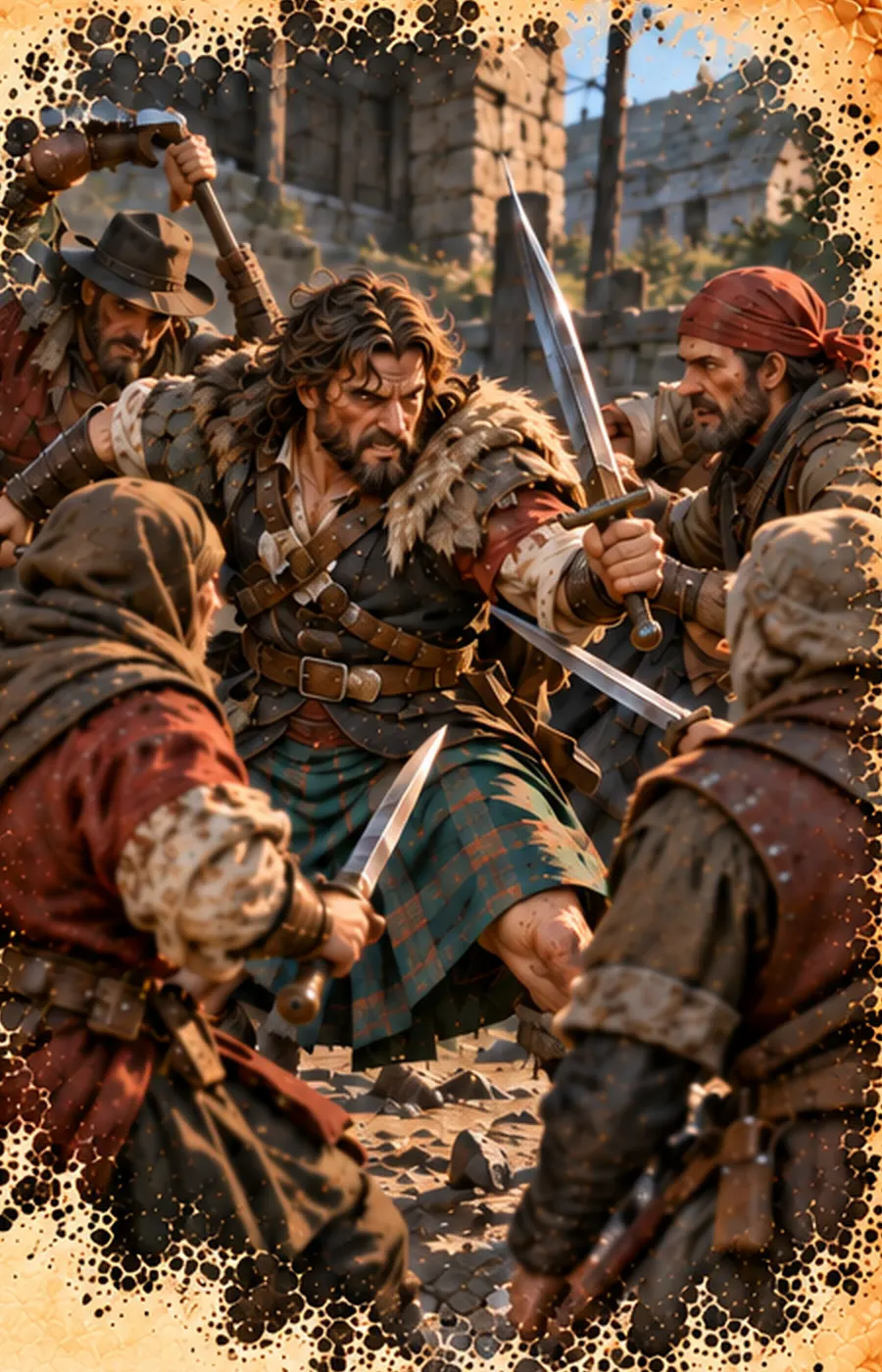
Outnumbering
The bonus. When two or more foes are in Melee range of the same target, each of their melee attacks against that target gets +1 for every attacker beyond the first, to a maximum of +3.
Example. Three bandits around one fighter attack at +2 each. Four or more attack at +3 each.
Who counts. Only foes able to fight count: not those who are prone, grappled or surprised.
Melee only. Ranged attacks get no bonus for outnumbering.
Knockdown and prone
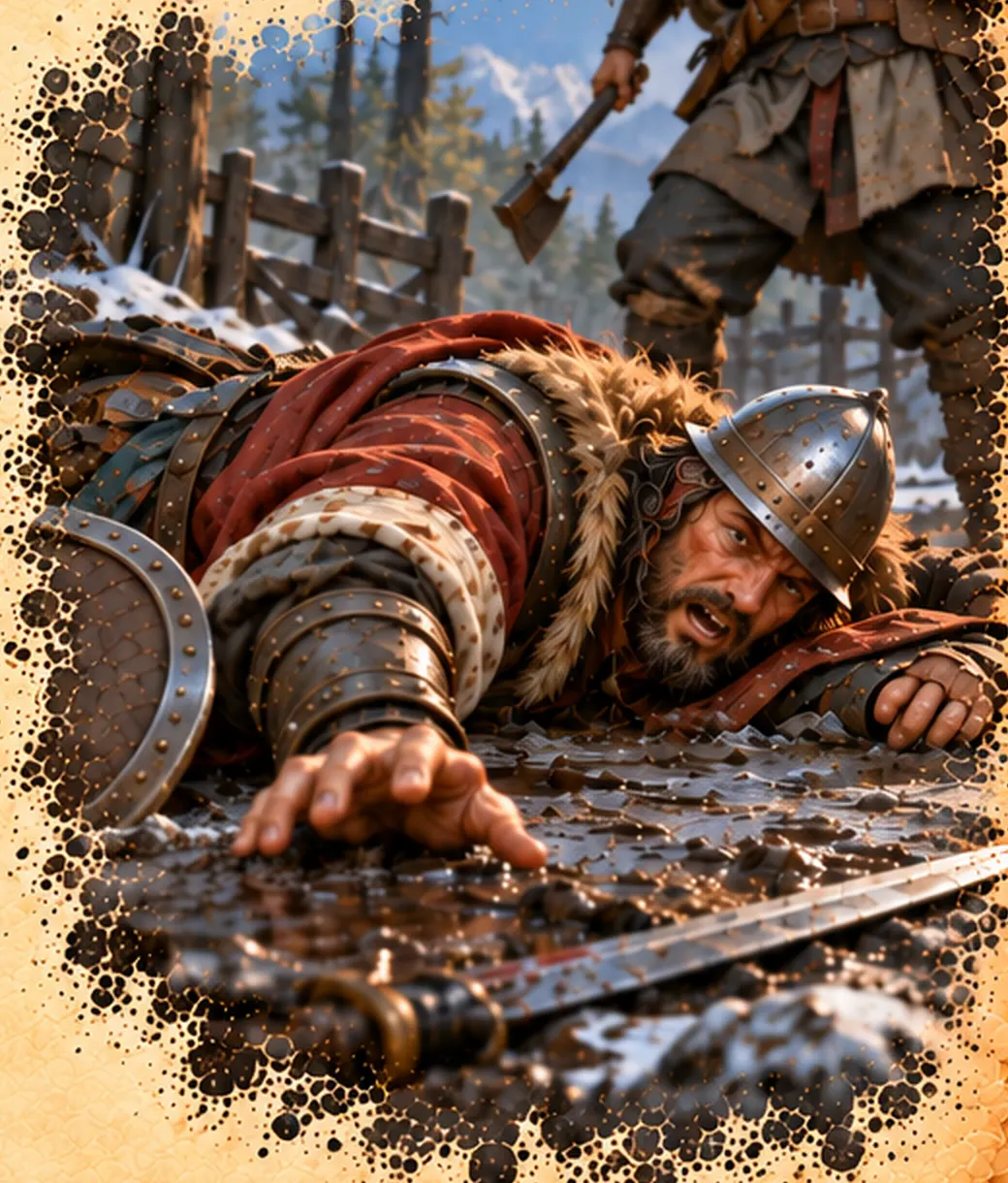
Knockdown. Any effect that knocks a character down, or makes them fall, leaves them prone.
Prone. A prone character's Melee Defence is 2 lower and their Ranged Defence is 2 higher.
No separate damage bonus. The margin of an attack adds to its damage, so the lower Melee Defence already makes every melee hit on a prone character 2 points harder.
Getting up is the Stand action, a half action. Dropping prone on purpose is a free action.
Unarmed combat
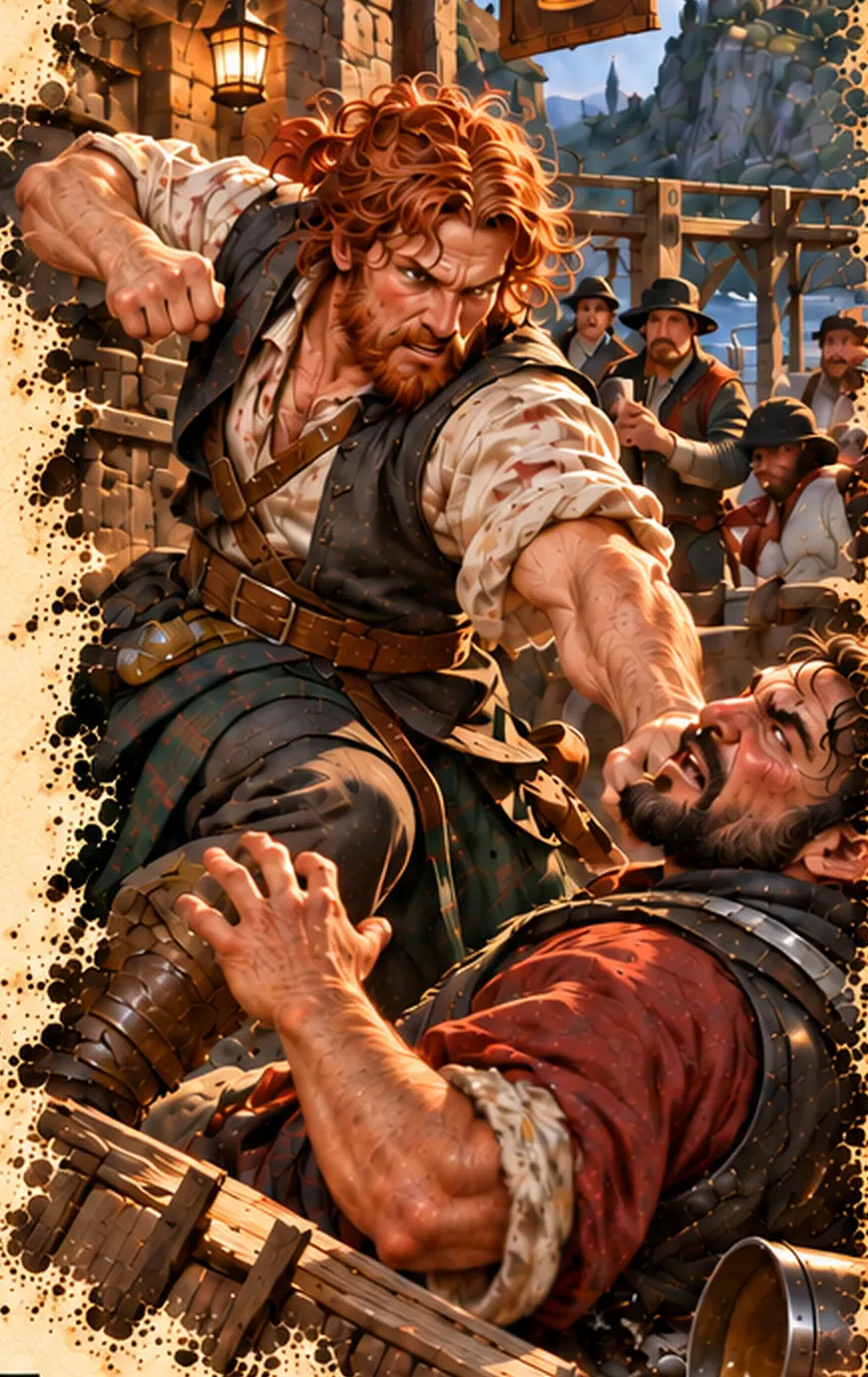
Fighting without a weapon uses the Melee (Brawling) group. It covers striking and grappling.
Brawling
The attack. A punch, kick or headbutt is a normal melee attack: 2d6 + Melee Skill + Brawling rank against the target's Melee Defence.
Weapon Damage. An unarmed blow has Damage 1. An improvised weapon, such as a chair leg or a bottle, has Damage 2 and also uses Brawling.
Damage dealt is worked out as for any melee hit: weapon Damage + Might + margin, less the target's Endurance and armour.
Talents. Pugilist raises an unarmed blow to Damage 3. Street Fighting adds +1 damage to Brawling attacks, and the two work together.
Grappling
Grappling is done with a Standard Attack. It needs a free hand, and the target can be no more than one size larger than you.
The roll. Roll your Melee (Brawling) attack total against your foe's Melee (Brawling) total. Ties go to the defender.
Seizing. If you win, your foe is grappled. If you lose by 5 or more, your foe makes one free melee attack against you at once.
Grappled. A grappled character cannot move, and can attack only the grappler, with Brawling or a dagger or knife. The grappler is under the same limits while holding on, and can let go as a free action.
Squeezing. On a later turn, the grappler can make the same roll again, as a Standard Attack. If you win, you deal damage equal to your Might + the amount you won by, less your foe's Endurance. Armour does not reduce it. It counts as a hit to the body. If you lose by 5 or more, your foe breaks free and makes one free melee attack against you.
Breaking free. A grappled character can make the same roll as a Standard Attack. If they win, they are free.
Talents. Wrestling adds +1 to all of these rolls. Street Fighting adds to the damage.
Fighting with two weapons
A fighter can hold a one-handed weapon in each hand. It changes how Swift Attack works and nothing else.
The off-hand weapon must be light: a melee weapon of Damage 3 or less, such as a knife, hatchet, club or smallsword, or a pistol.
Swift Attack. One attack comes from each hand. The main-hand attack is at -1 and the off-hand attack at -2, in place of -2 on both.
Targets. The two attacks can go against the same foe or against two different foes. Against two different foes, the second attack takes a further -1.
A pistol in the off hand. A pistol in the off hand can be fired as the off-hand attack, at Melee range or further. It uses Ranged Skill and the Firearms group against Ranged Defence, takes the same penalty, and must be reloaded afterwards as usual.
What it costs. No shield, and no free hand for grappling.
Talents. Ambidextrous cuts the off-hand penalty to -1. Dual Wielder removes the main-hand penalty.


Higher ground and fighting from horseback
- Higher ground. A fighter standing clearly above a foe, such as on a wall, a stair or a wagon, gets +1 on melee attacks against them.

On horseback. A rider counts as on higher ground against anyone on foot. A rider gets no bonus against another rider, or against a creature of Large size or bigger.
Moving. A rider moves with the mount's Movement instead of their own.
Charging. A mounted Charge gets the +1 for the charge and the +1 for higher ground.
Lance. A mounted Charge with a lance is a critical hit if it hits, whatever the dice show.
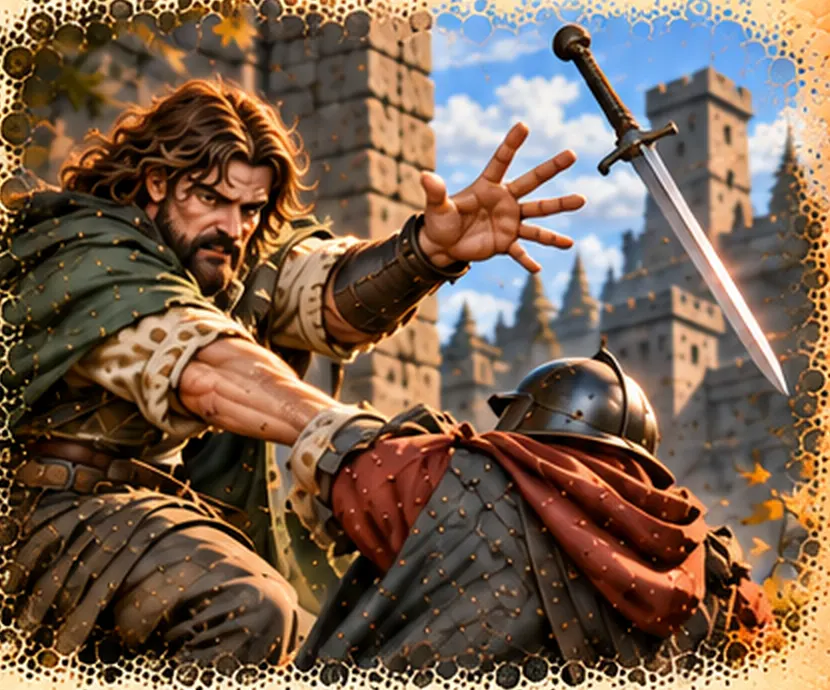
Disarming
Disarming is hard to do without training. It is a full action and an attack action, and it deals no damage.
The roll. Roll your melee attack total against your foe's, each using the weapon in hand. Compare the two totals.
Untrained. Without the Disarm talent you roll at -3. This is deliberately outside the usual limit of -2.
Ties go to the defender.
| Result | Outcome |
|---|---|
| Win by 5 or more | Taken. The weapon is in your free hand. With no free hand, it is flung instead. |
| Win by 3 or 4 | Flung. The weapon lands d6 paces away, in a direction you choose. |
| Win by 1 or 2 | Dropped. The weapon falls at your foe's feet. |
| Tie, or lose by up to 4 | Nothing happens. |
| Lose by 5 or more | Your foe makes one free melee attack against you at once. |
Picking it up. Recovering a dropped weapon is a Ready action. A flung weapon must be reached first, and moving away from a foe in reach gives them a free attack as usual.
What cannot be disarmed. Natural weapons, such as claws, teeth and fists.
Disarming without a roll. An effect that disarms outright, such as Master Prizefighter, gives the Dropped result.