The History of the New WorldChapter the Twelfth
In this chapter
- Chapter 12 - The History of the New World
- Story of the New World
- The peoples of the continent - Forest elves
- River elves
- Plains elves
- Canyon dwarves
- Shore dwarves
- The newcomers - Southern crown
- Charter Colonies
- River Traders
- Merchant Company
- Seekers
- Halfling Homesteads
- The Worldsoul
- Life on the Frontier
- A History of the New World (Before the ships; First contact)
- The Colonies
- Living Memory
- The Present Day
Story of the New World
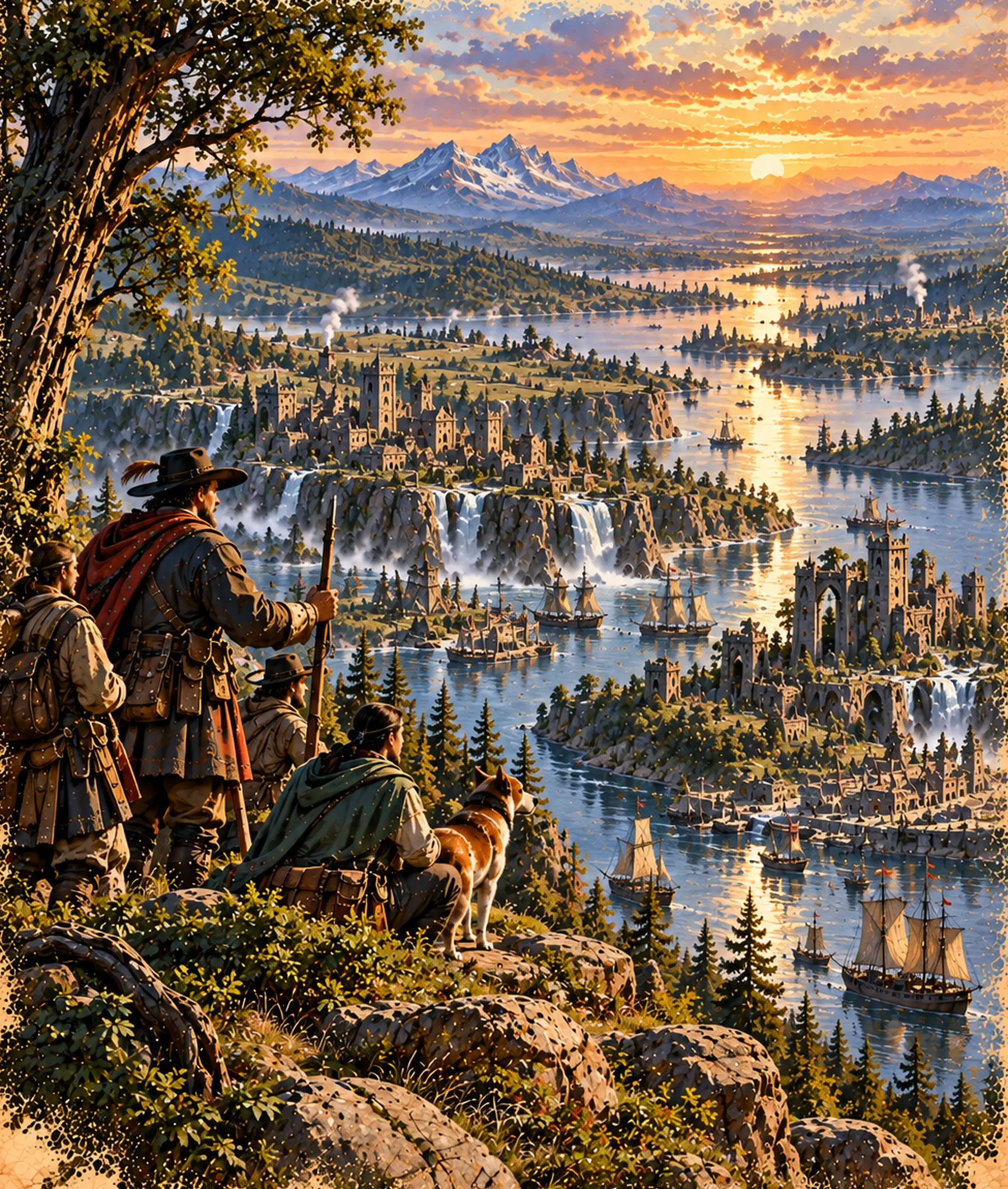
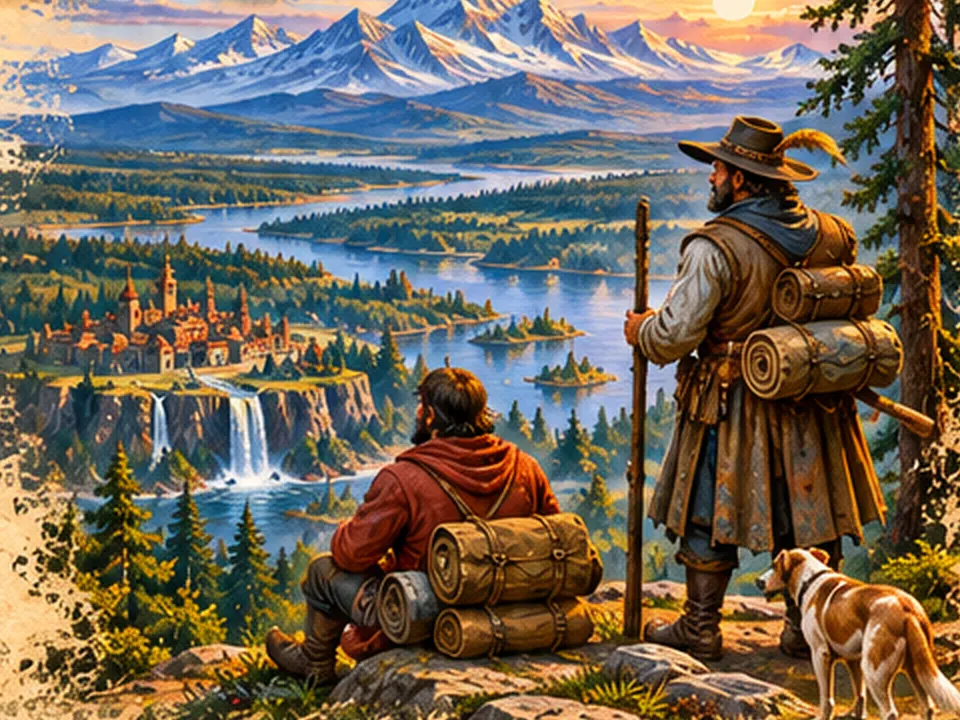
It is a new world to those who have just arrived, and a very old one to those who were always here. This chapter tells the story of the continent as the people who live on it know it.
The land
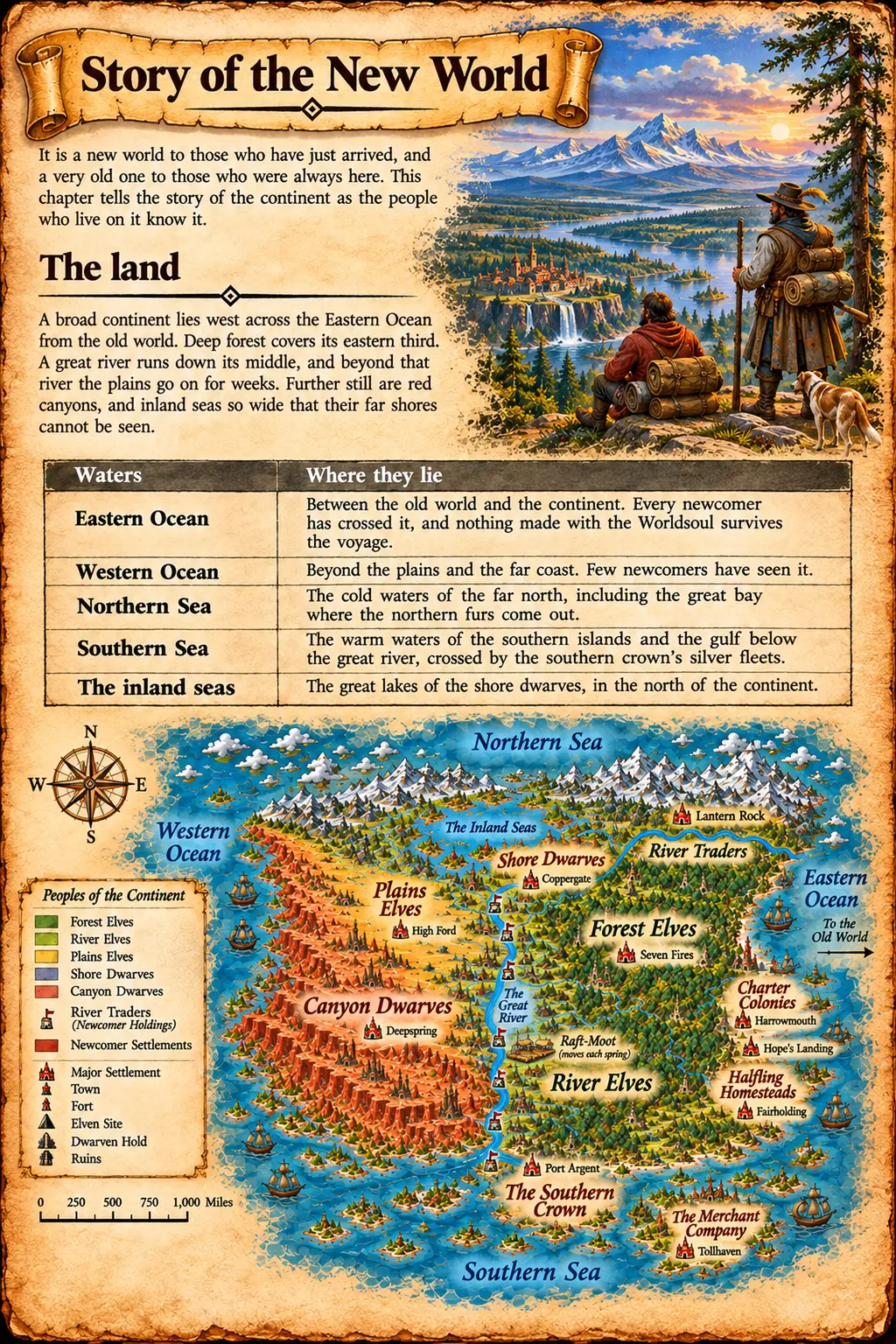
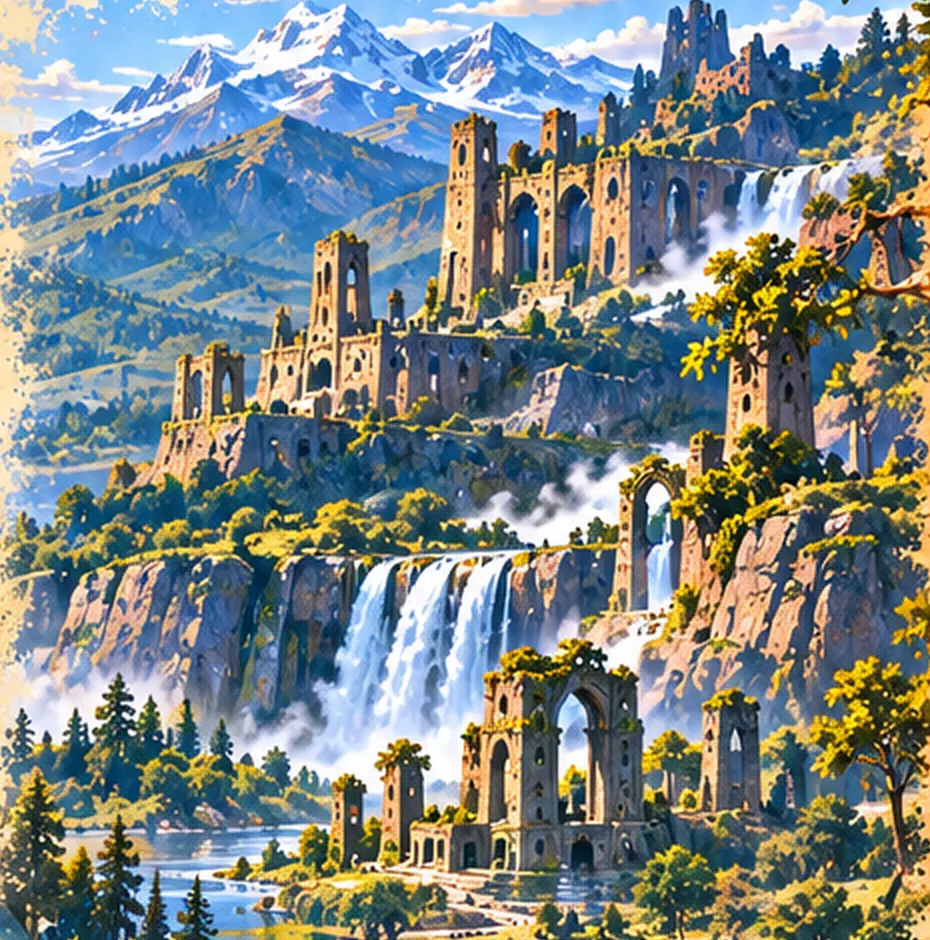
A broad continent lies west across the Eastern Ocean from the old world. Deep forest covers its eastern third. A great river runs down its middle, and beyond that river the plains go on for weeks. Further still are red canyons, and inland seas so wide that their far shores cannot be seen.
| Waters | Where they lie |
|---|---|
| Eastern Ocean | Between the old world and the continent. Every newcomer has crossed it, and nothing made with the Worldsoul survives the voyage. |
| Western Ocean | Beyond the plains and the far coast. Few newcomers have seen it. |
| Northern Sea | The cold waters of the far north, including the great bay where the northern furs come out. |
| Southern Sea | The warm waters of the southern islands and the gulf below the great river, crossed by the southern crown's silver fleets. |
| The inland seas | The great lakes of the shore dwarves, in the north of the continent. |
The peoples of the continent
Elves and dwarves have lived here for as long as anyone remembers. Each of the five peoples has its own history with the newcomers. Their talents and full descriptions are in chapter 2, Species and peoples.
Forest elves
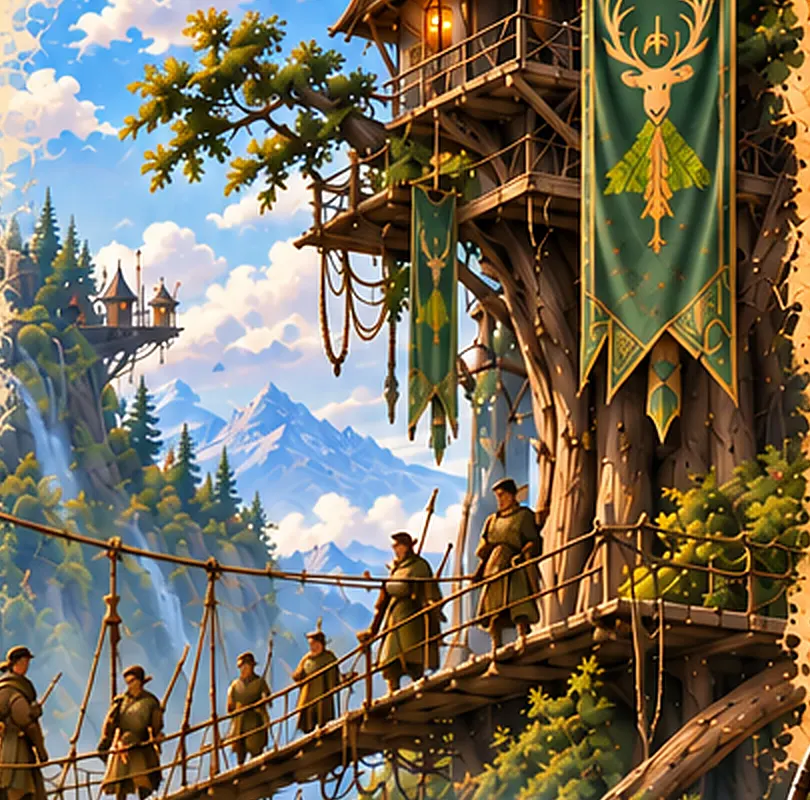
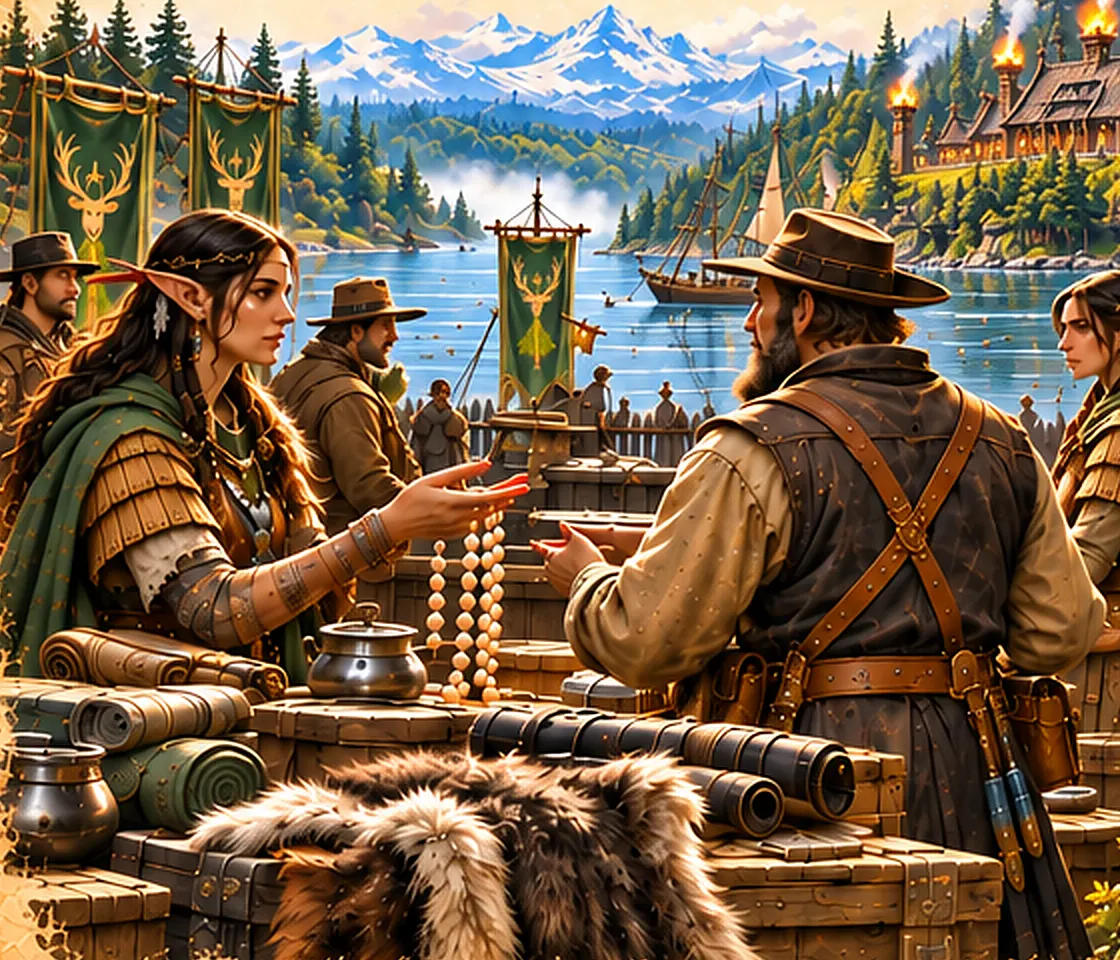
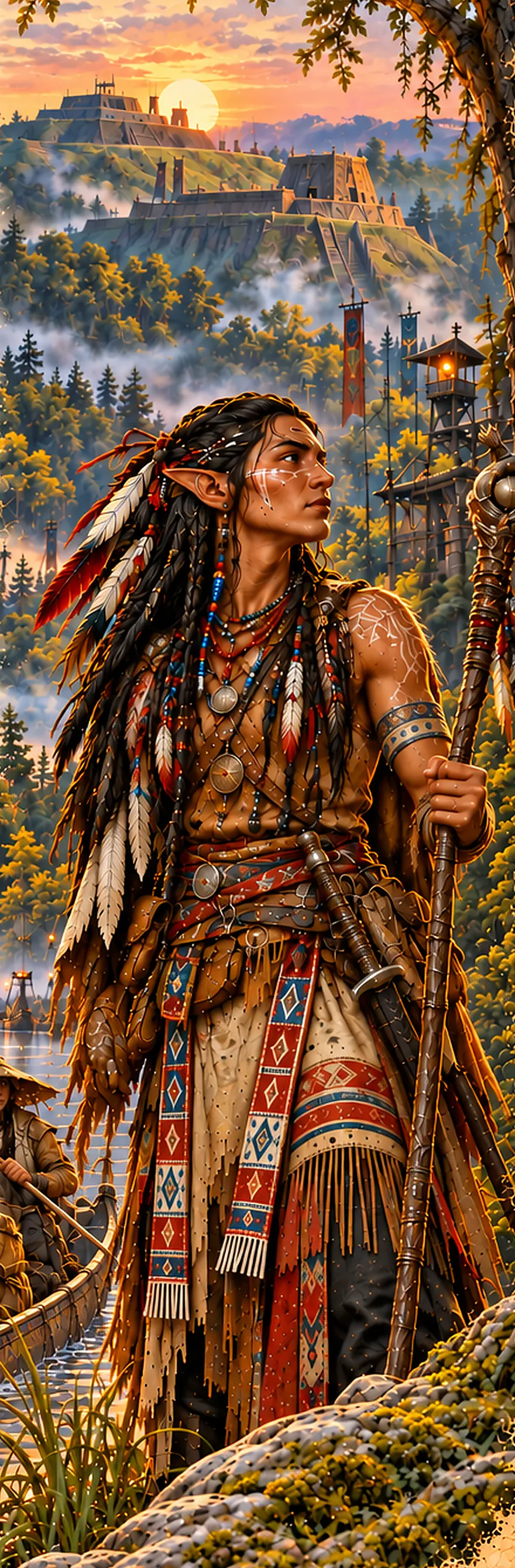
When they arrived. They have always lived in the deep eastern forest. Three hundred and fifty years ago five of their nations ended their wars with one another and founded the League under a single law.
Main city. Seven Fires, deep in the eastern forest, where the League's council meets in the longest council house on the continent. Every nation of the League keeps a fire burning there.
What shaped them. In the Turning Back, 165 years ago, their Keepers drove a crown army out of the forest with a storm that lasted nine days. The river traders fired the first gun ever used against them, and the merchant company sold them guns of their own. With those guns they fought the long Pelt Wars against their neighbours, the river traders and the charter colonies, until the Great Peace 65 years ago made them neutral between the crowns.

How they live now. They live in villages of the eastern forest, governed by the League's councils. They trade furs for steel, kettles, blankets and guns at the forts, and seal agreements with strings of shell beads. Their warriors carry the longbow, the spear and the war club, and wear armour of wooden slats.
What they want. To keep the forest and the League whole, and to stay out of the coming war. Both the colonies and the traders are pressing them to choose a side, and either choice could break the Great Peace.
River elves
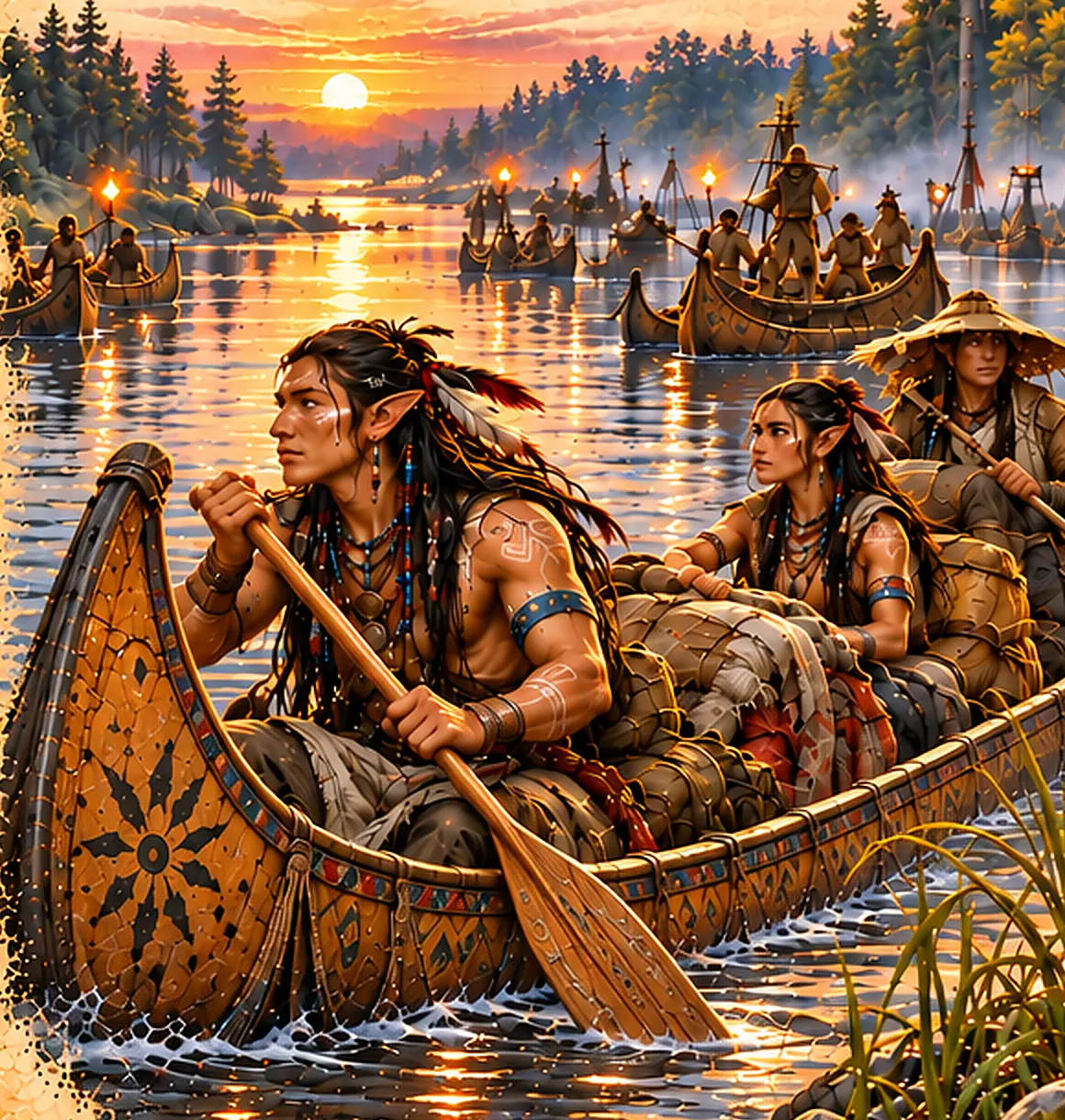
When they arrived. They have always lived along the great river. Their mound cities rose there 900 years ago and joined each city to the next by water.
Main city. None. The clans meet each spring at the Raft-Moot, a floating market of hundreds of lashed boats that moors at a different bend of the river every year. Outsiders are welcome to trade there, but not to stay.
What shaped them. The cities emptied within a single lifetime 550 years ago, and nobody outside the clans knows why. Crown expeditions marched through their country 160 years ago and brought sickness with them. Twenty years ago the river traders built a chain of forts through their waters. In the Silent Year, 25 years ago, a circle of seekers went to an old mound site and was never seen again.
How they live now. They are boat-clans that trade, carry and smuggle, never settle, and do much of their business after dark. They keep knives, light crossbows and hidden blades close. Their Keepers call their way of working the Breath the Braiding, and do not explain it.
What they want. To keep the river free for their boats, the mounds undisturbed and the clans' silence unbroken. They will carry for any side that pays, and they have no patience for the antiquarians and seekers who dig where they should not.
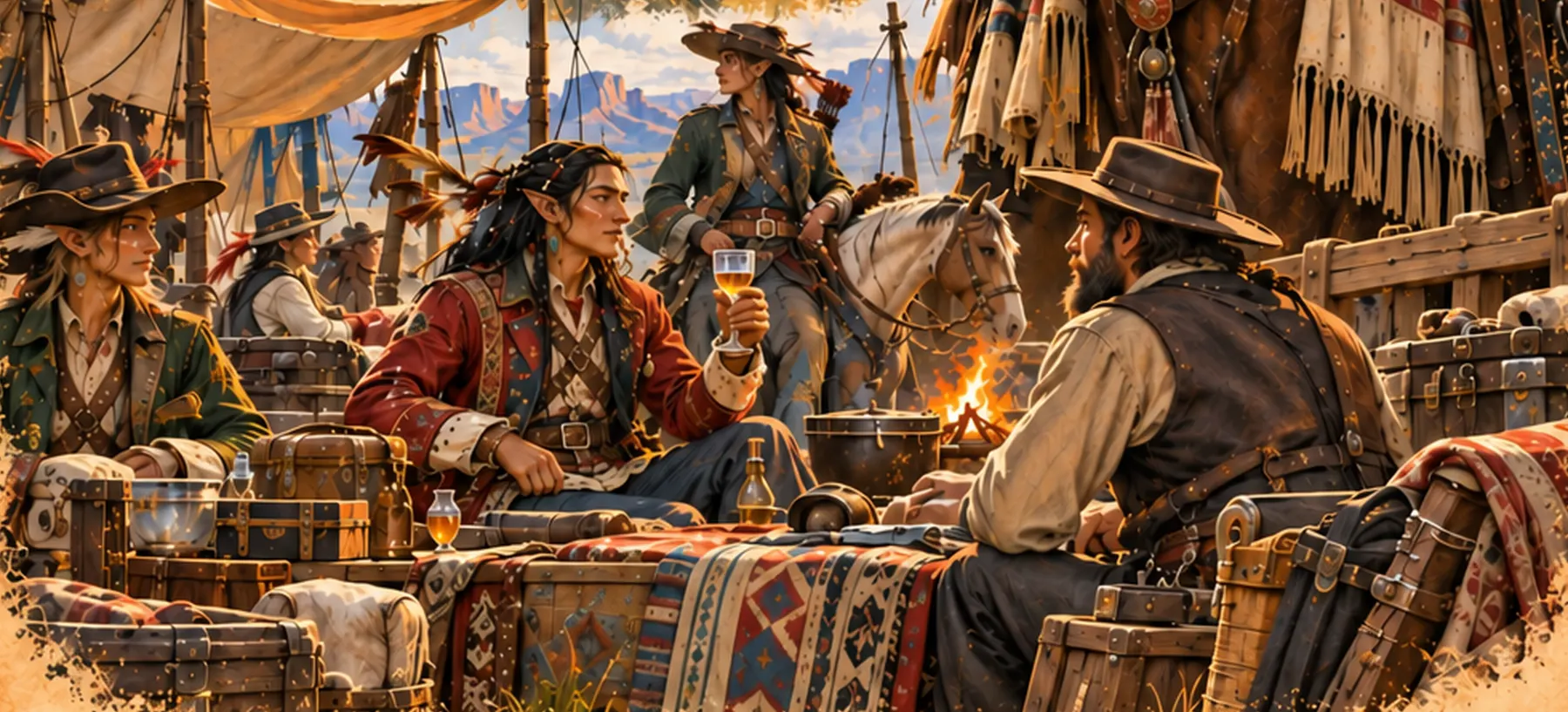
Plains elves
When they arrived. They have always lived on the grasslands west of the great river.
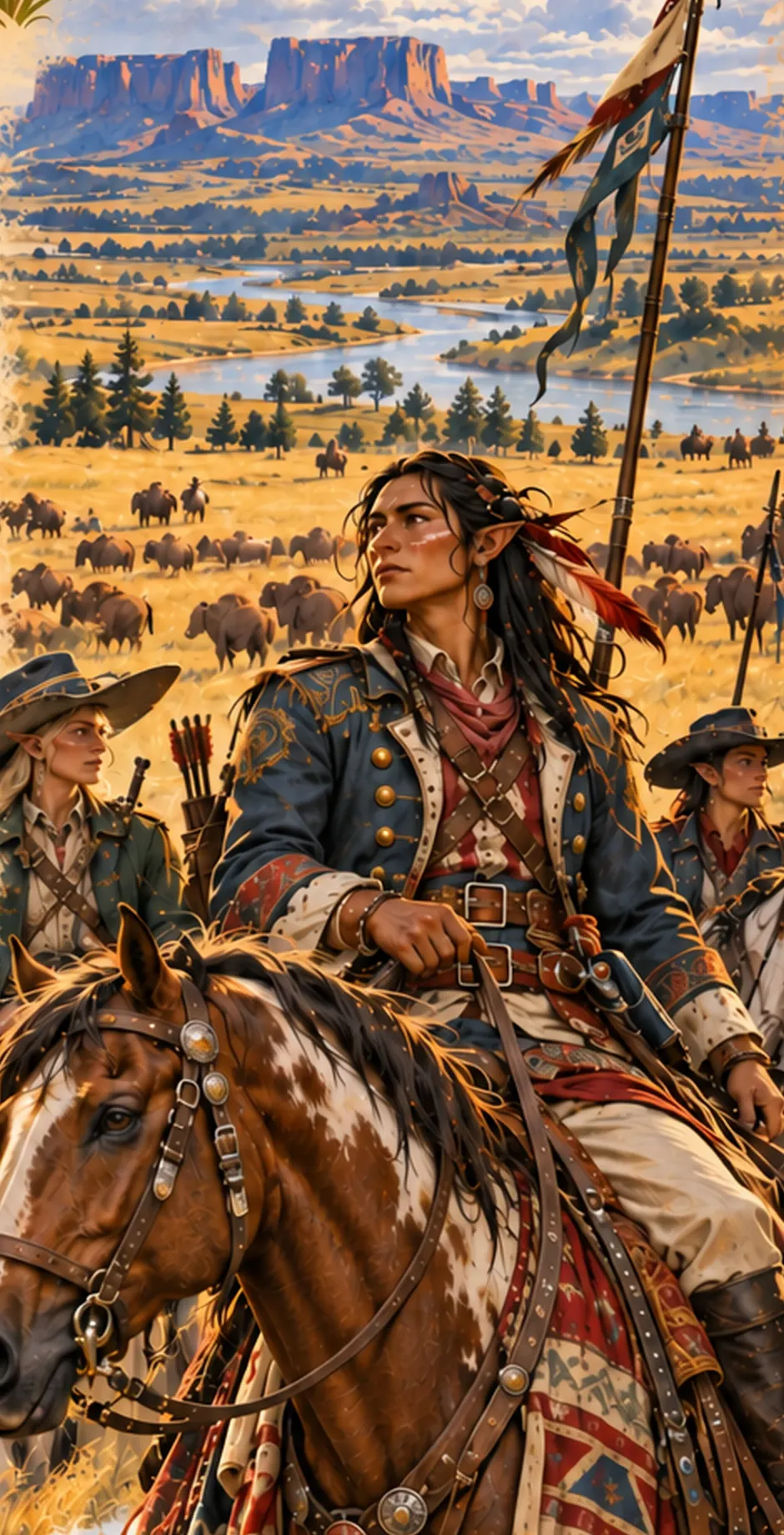
Main city. High Ford, a trading town of painted lodges and stone warehouses at a crossing of the western river. It is half empty in winter and holds thousands at the summer horse fairs.
What shaped them. Forty-five years ago the Rising loosed the herds of the southern ranches, and the horses spread north onto the grass. Within a generation the plains elves were the finest riders on the continent. Trade with the newcomers has made them the wealthiest people anywhere.
How they live now. They ride with lance, shortbow and sabre. Horses and hides go out, and silver, cloth, glass and steel come back. A plains elf of standing wears a tailored coat, drinks from glass and settles honour with steel. They call the old tuskers elders and will not hunt them, and their Keepers call their working the Under-Song.
What they want. To keep the trade flowing and their herds growing, and to keep the newcomers' war off the grass. They welcome newcomer goods, not newcomer settlers.
Canyon dwarves
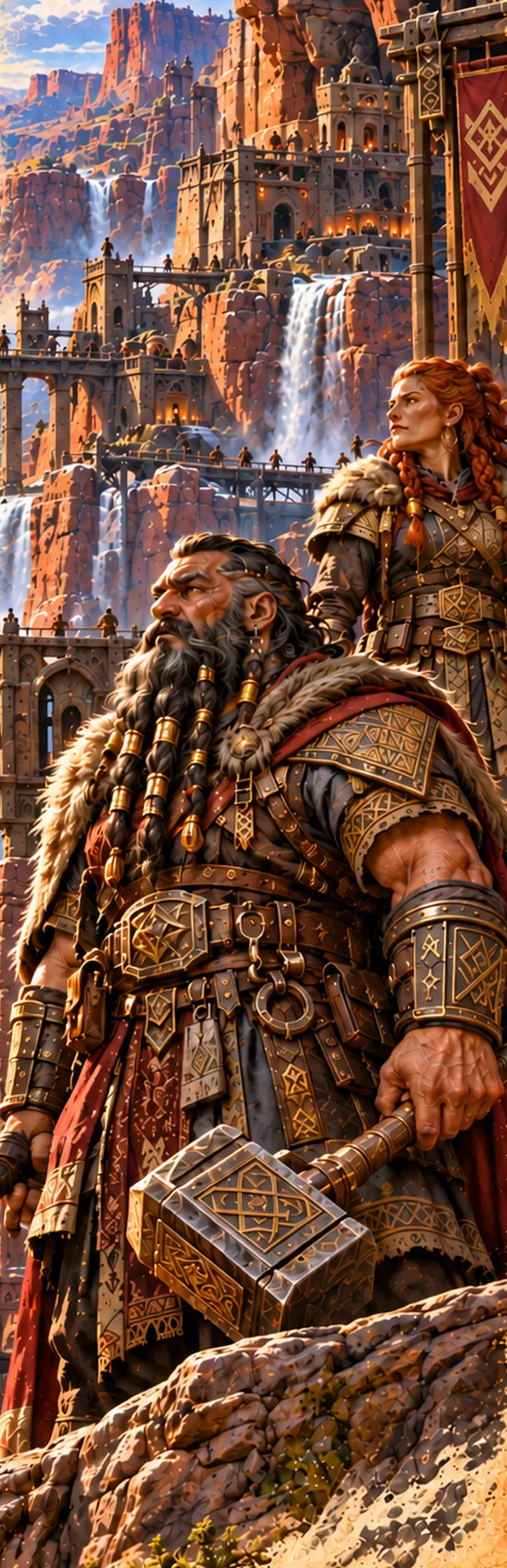
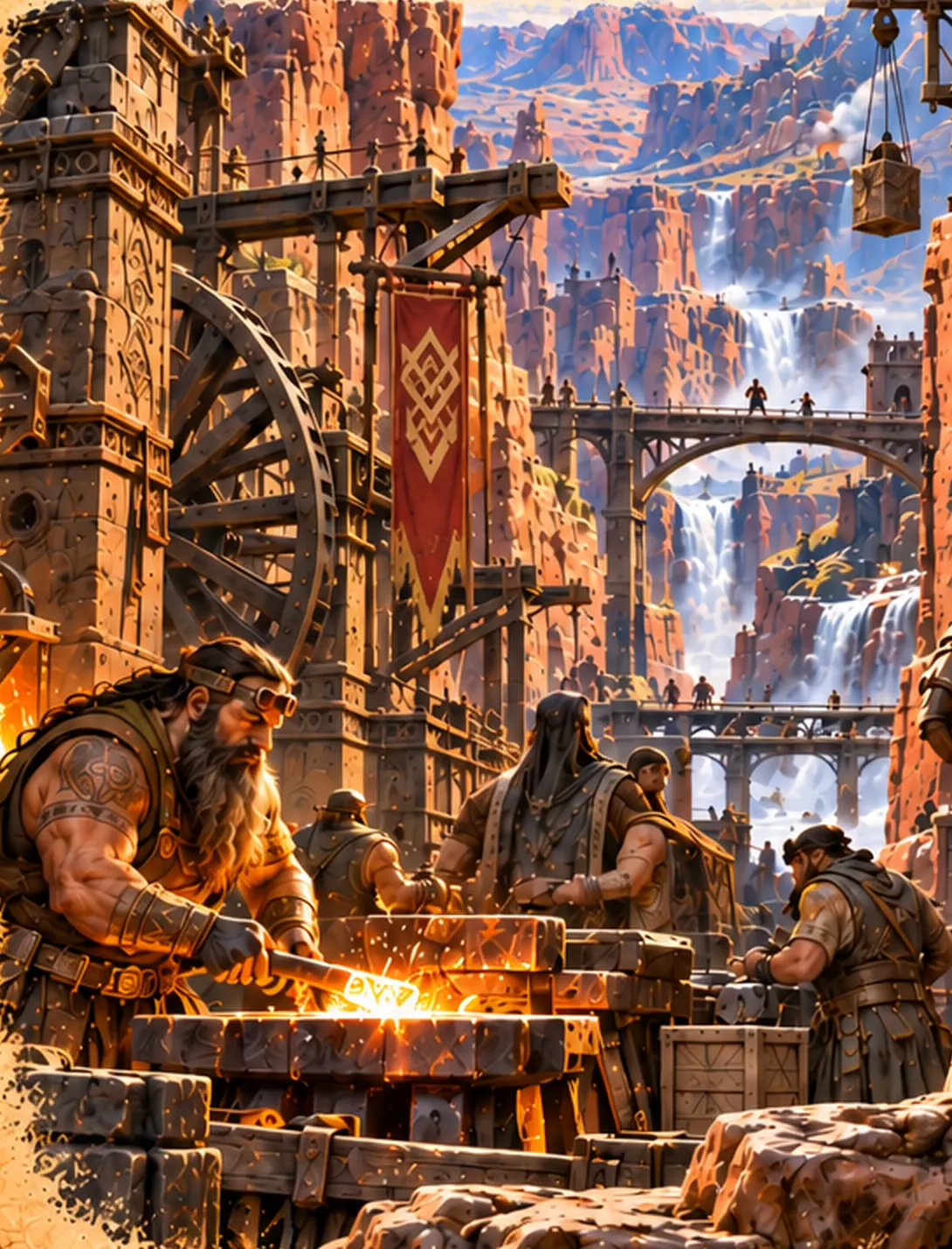
When they arrived. They built their towns into the cliffs and mesas of the red canyon country 800 years ago, and tied their rune-craft to water and stone.
Main city. Deepspring, a cliff town of a thousand rooms built around a spring that has never failed. The crown's mission stands at the foot of the cliff; the forges are somewhere behind it.
What shaped them. Crown expeditions came through 160 years ago with sickness at their heels. Forty years later the crown planted missions and garrisons among them and forbade the cutting of runes. Forty-five years ago they rose as one in the Rising, drove the crown out for twelve years and relit the rune-forges. The crown came back 33 years ago, but on terms.
How they live now. They live in cliff towns under crown garrison and mission. The rune-forges stay lit behind closed doors, and rune-work is sold only for a favour, a rare material or a promise. They call the Worldsoul tnd Deep, and go to war with maul, warhammer and great axe.
What they want. To keep their forges lit and their craft their own. Many want the crown gone for good, but few want another rising they might lose.
Shore dwarves
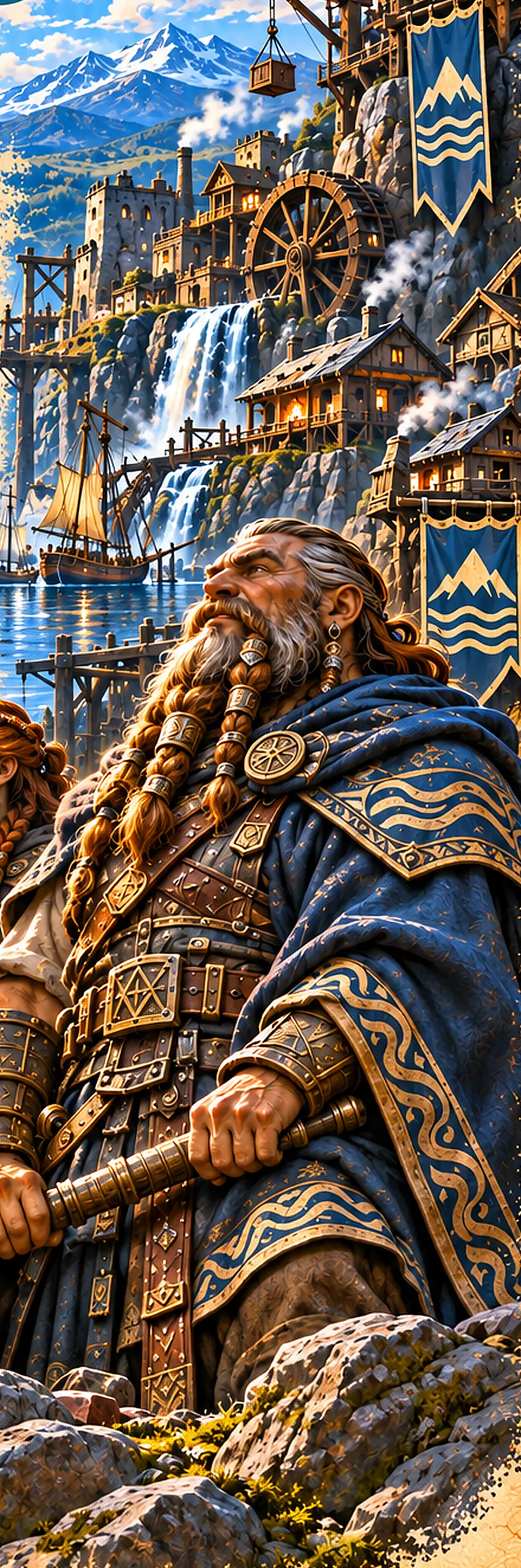
When they arrived. They have worked the lake copper beside the inland seas since before the elves kept count, and they cut the first rune into metal.
Main city. Coppergate, a forge town on the largest of the inland seas, whose copper roofs can be seen from a day out on the water.
What shaped them. Ninety years ago the merchant company paid them to cut a great engine-rune into a mill at Three Falls. It ran day and night for nine years, then tore itself and the town around it apart. Since then they have refused to cut great runes for outsiders.
How they live now. They live in mining and forge towns along the shores of the inland seas. They weigh coin instead of counting it, reckon wealth in copper and worked metal, and wear mail and plate of their own making.
What they want. To keep the craft that began with them from being bought up by the newcomers, and to trade their copper on their own terms. The war in the river valley is close enough to their shores to worry them.

The newcomers
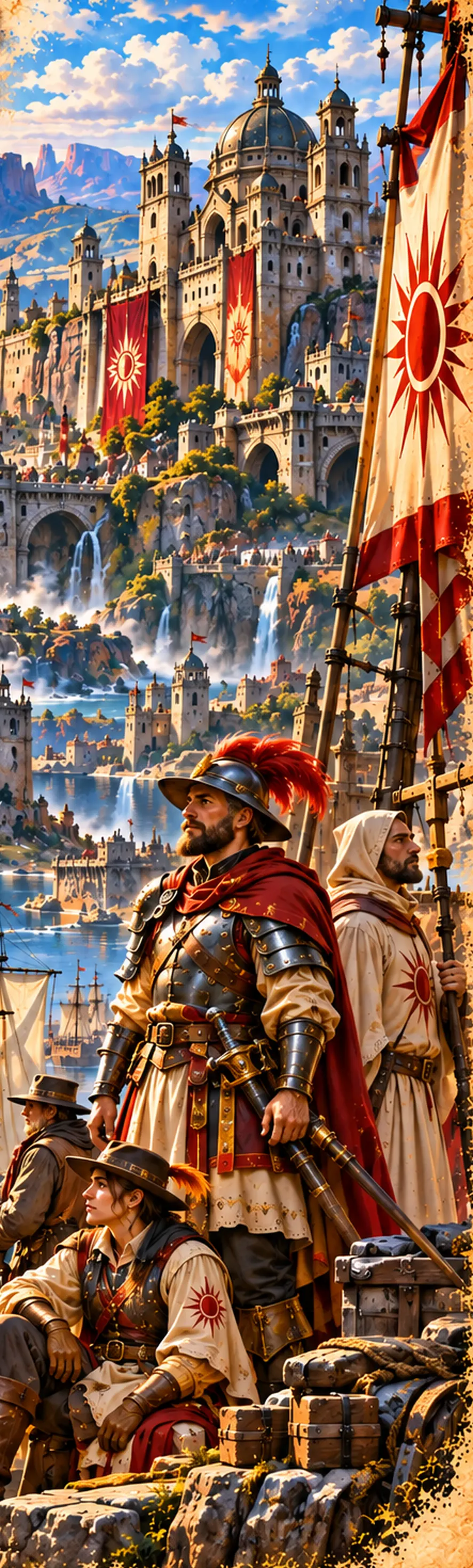
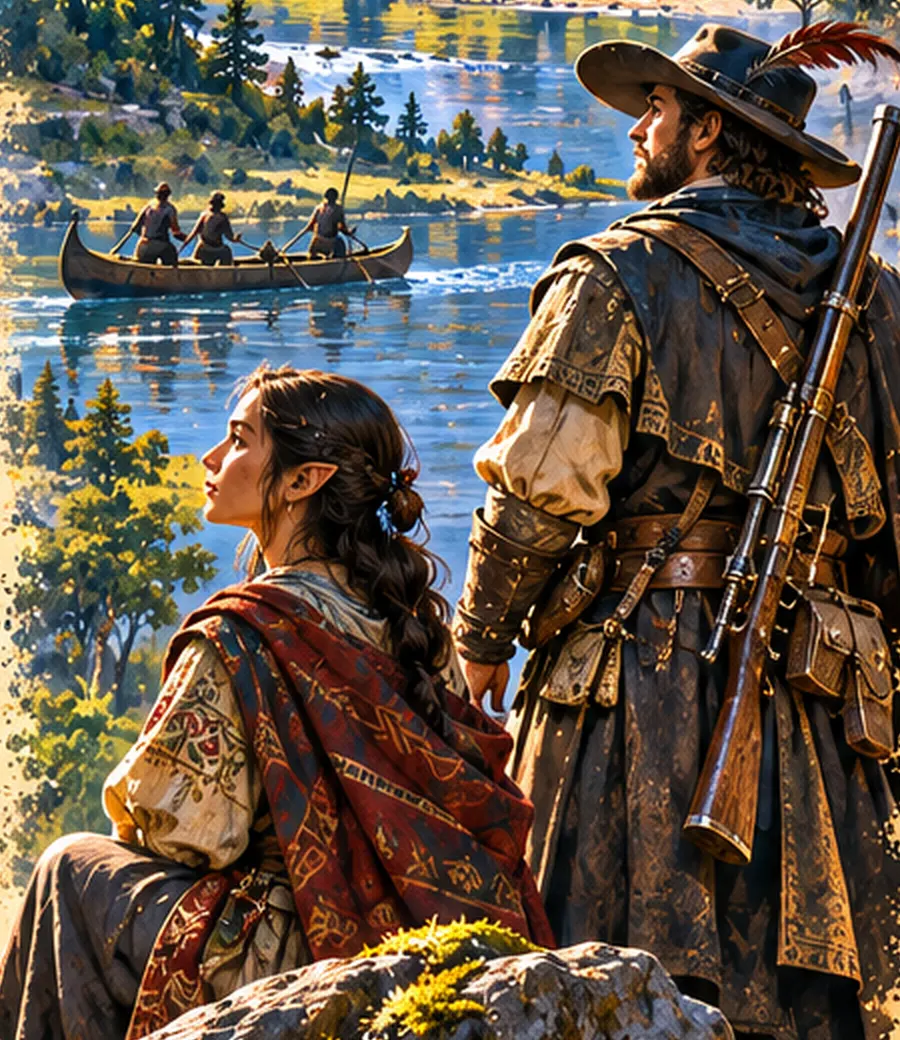
Humans and halflings came across the Eastern Ocean from the old world, bringing iron, coin, charters, creeds and gunpowder, and sickness and wars with them. Each group came for its own reasons.
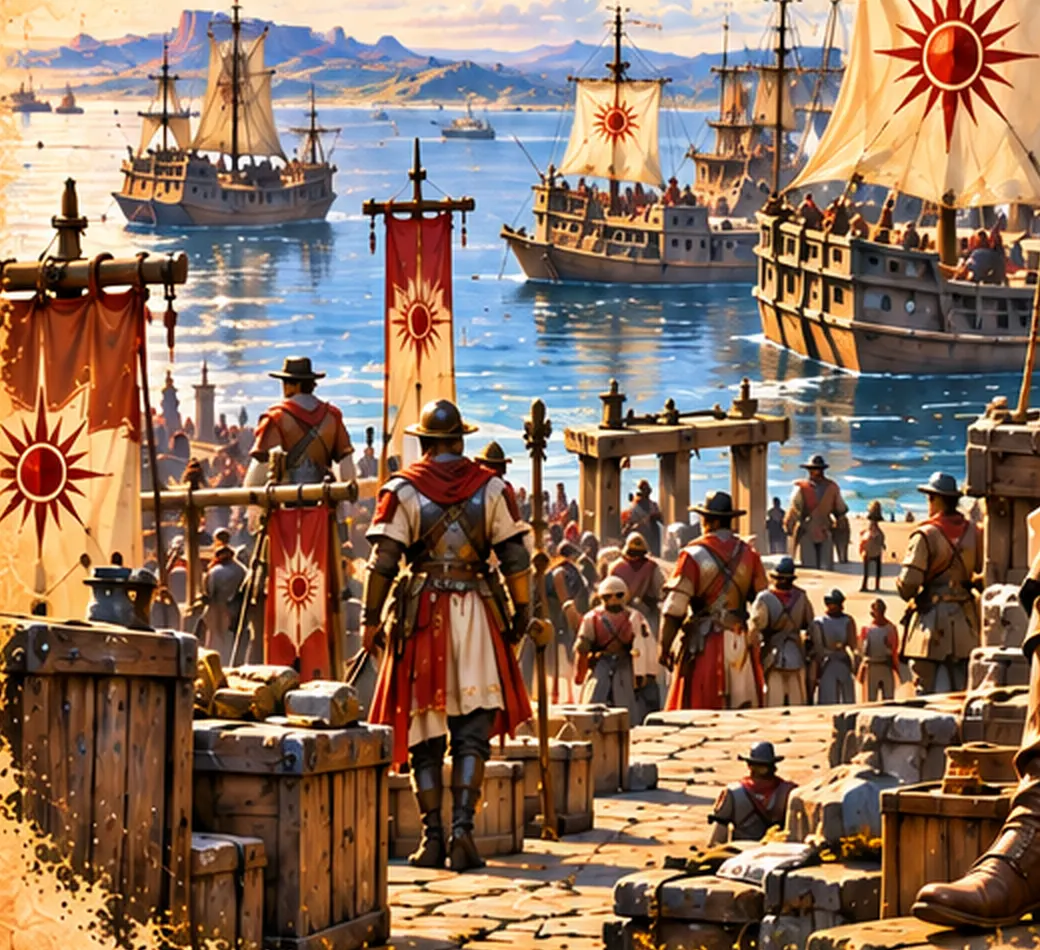
Southern crown
First to sail. Last to yield.
When they arrived. Its ships reached the southern islands 190 years ago, the first newcomers to arrive.
Main city. Port Argent, on the southern gulf, where the crown's viceroy sits and the silver piece is minted.
What shaped them. Within fifteen years it had toppled the rich kingdoms of the far south and was shipping their silver home. Its army was turned back from the eastern forest 165 years ago. When the first Worldsoul-wrought treasures reached the old world as dead metal, 155 years ago, it declared the Worldsoul a deceit and ordered it rooted out. It planted missions among the canyon dwarves 120 years ago, lost the canyons in the Rising, and took them back on terms 33 years ago.
How they live now. It holds the south and the canyon country by garrison and mission. Its people are soldiers, priests, ranchers and officials, and its silver piece is the coin of the whole continent.
What they want. To root out the Worldsoul, keep its silver and its canyons, and keep the other powers from growing strong enough to challenge it.
Charter Colonies
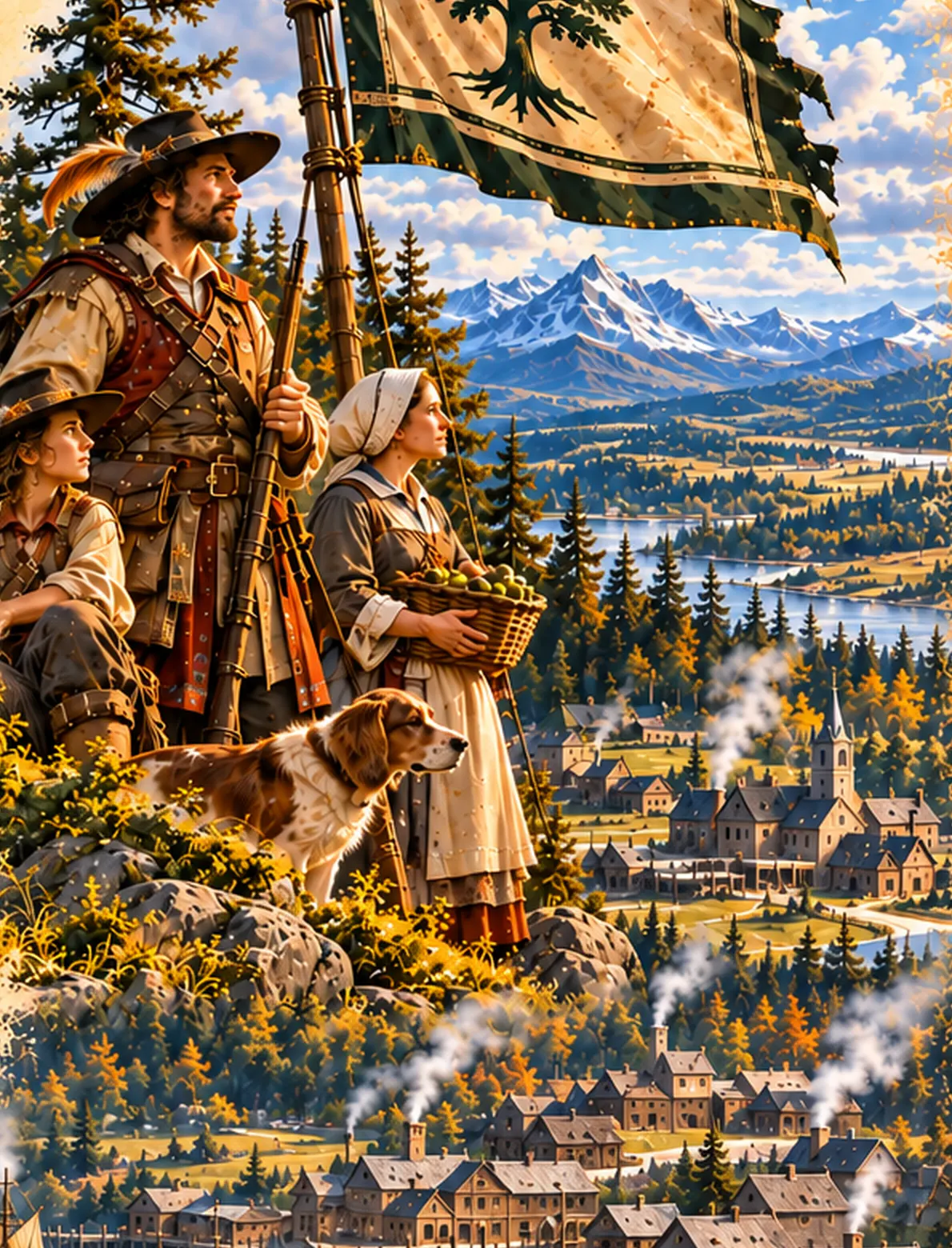
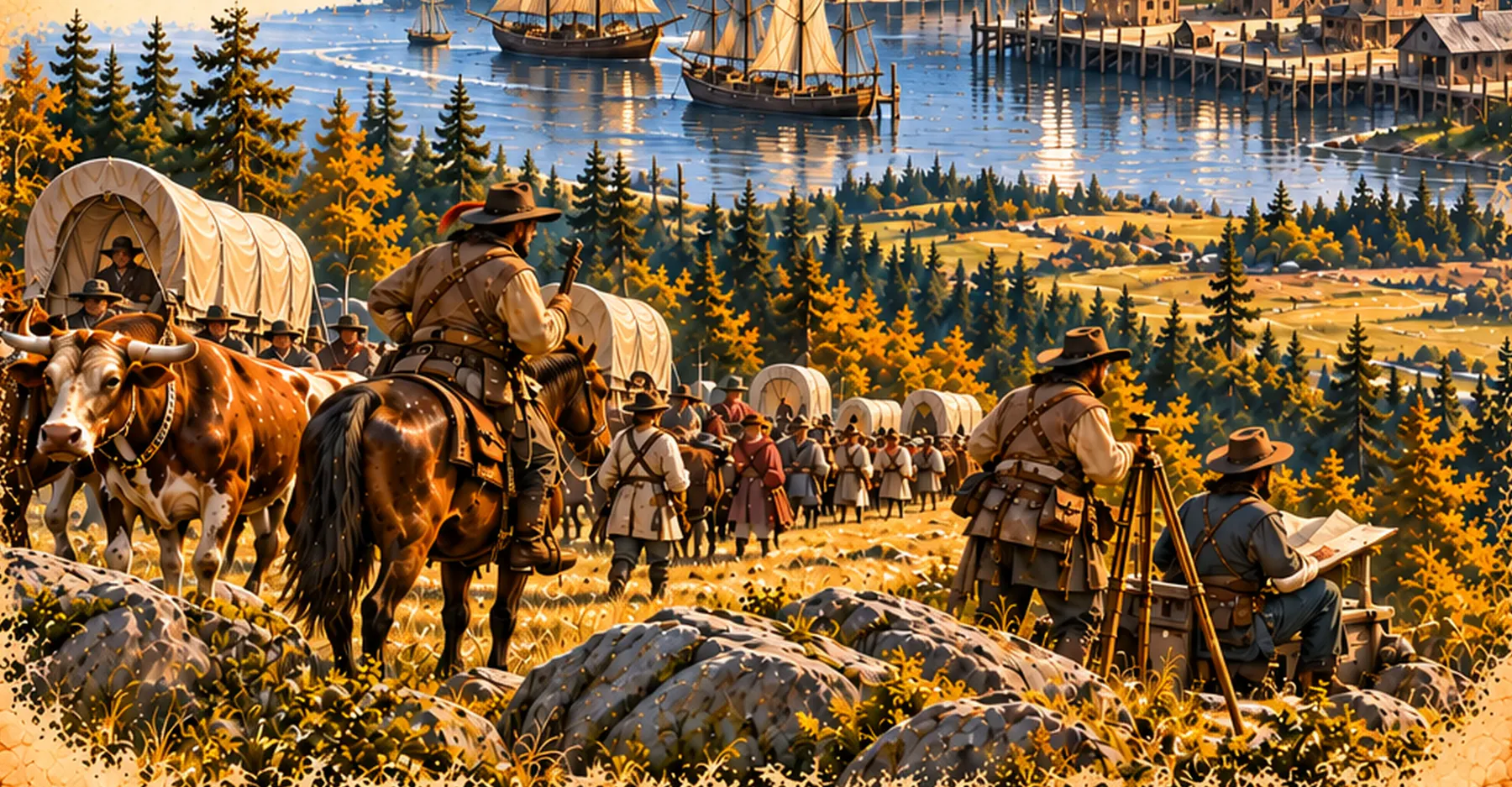
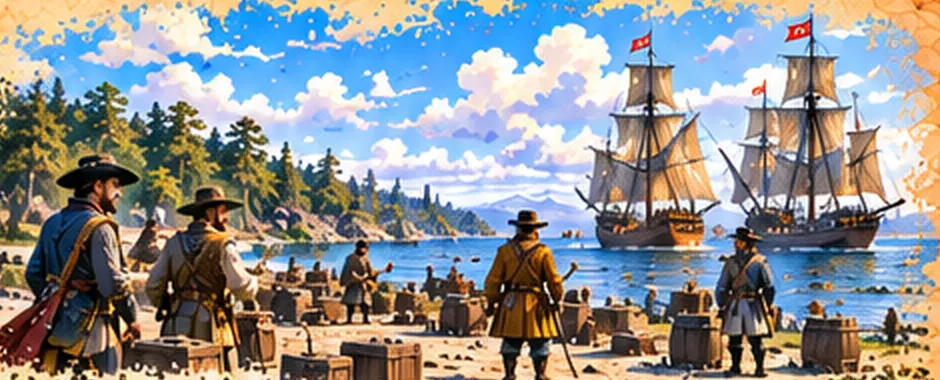
When they arrived. They landed on the eastern shore 130 years ago, under royal charters to grow cash crops for the home market.
Main city. Harrowmouth, the largest port on the eastern shore and the seat of the oldest charter.
What shaped them. Their frontier towns burned in the Pelt Wars. In the Burnings, 75 years ago, their witchfinders hanged dozens for working the Worldsoul, most of them their own settlers. They seized the merchant company's harbour 70 years ago. Eight years ago their militia took a fortress on the river traders, and a treaty signed in the old world handed it back.
How they live now. They are farmers, traders and militia, spreading west, with every town drilled in the musket and every claim resting on paper. Their sects preach against the Worldsoul.
What they want. Land, and room to spread west. Their surveyors are already in the river valley, and many colonists want the war that will decide who keeps it. They want the Worldsoul gone.

River Traders
When they arrived. They founded a post on the northern river 120 years ago and began sending their young men inland.
Main city. Lantern Rock, the walled post on the northern river where the first traders landed, and still the heart of the fur trade.
What shaped them. Their captain fired the first gun ever used against the League, and they fought it through the Pelt Wars before the Great Peace made them allies. Twenty years ago they built a chain of forts down the great river to join their northern and southern holdings. Eight years ago they lost a fortress to the colonies and won it back only by treaty.
How they live now. They are few and spread across half a continent. They live in the villages of the nations, learn their languages and marry into their families, and run the fur trade from their forts.
What they want. To hold the great river and the fur country, keep the nations as allies, and stop the colonies at the river valley. They would rather use the Worldsoul than end it.

Merchant Company
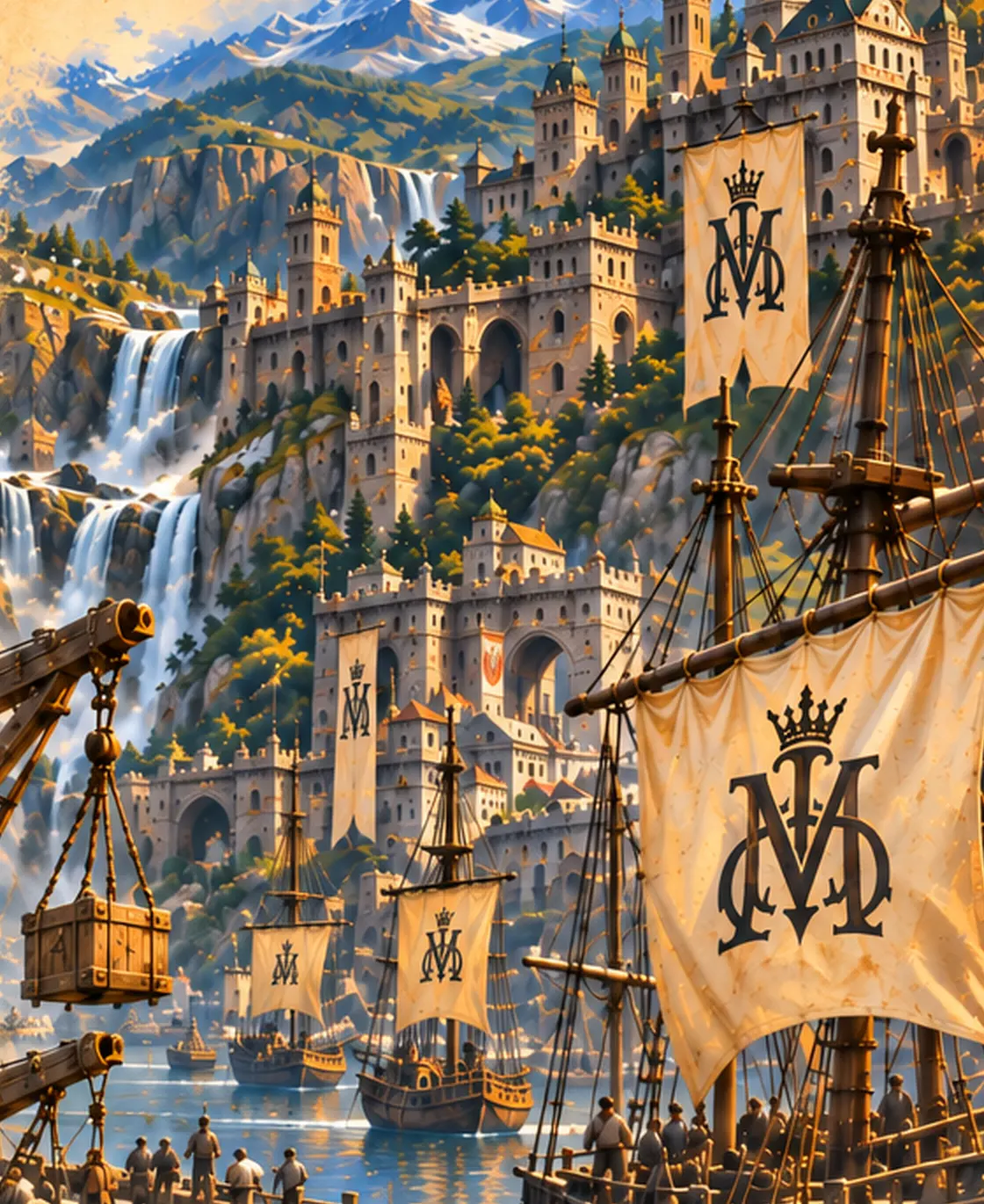
When they arrived. It bought an island harbour 110 years ago and has sold to anyone ever since.
Main city. Tollhaven, a free port on the southern islands where the company keeps its counting houses under another flag.
What shaped them. It sold the guns that armed the League for the Pelt Wars. It paid for the great engine-rune at Three Falls and lost a town when it tore loose. Eighty years ago the home governments closed their ports to foreign ships, and the company made a second trade of smuggling. Seventy years ago the charter colonies seized its harbour.
How they live now. It keeps its counting houses and contacts and trades on under another flag. Its factors, clerks and agents go wherever there is a profit, and its bills of credit are honoured by its own people and almost no one else.
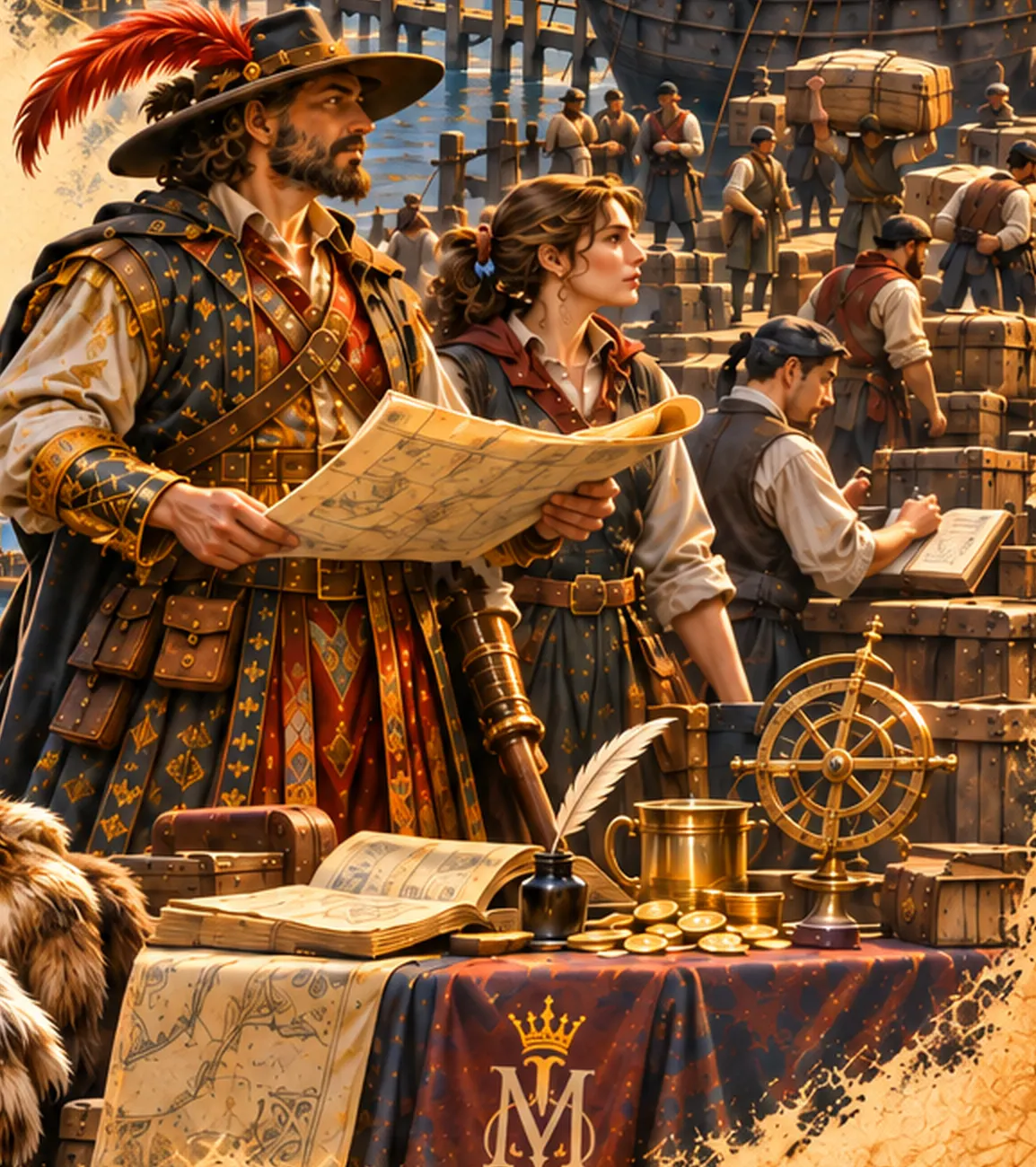
What they want. Profit, and to own the Worldsoul rather than end it. It pays surveyors to map where the Worldsoul runs strong, and would pay almost anything for a runewright of its own.
Seekers
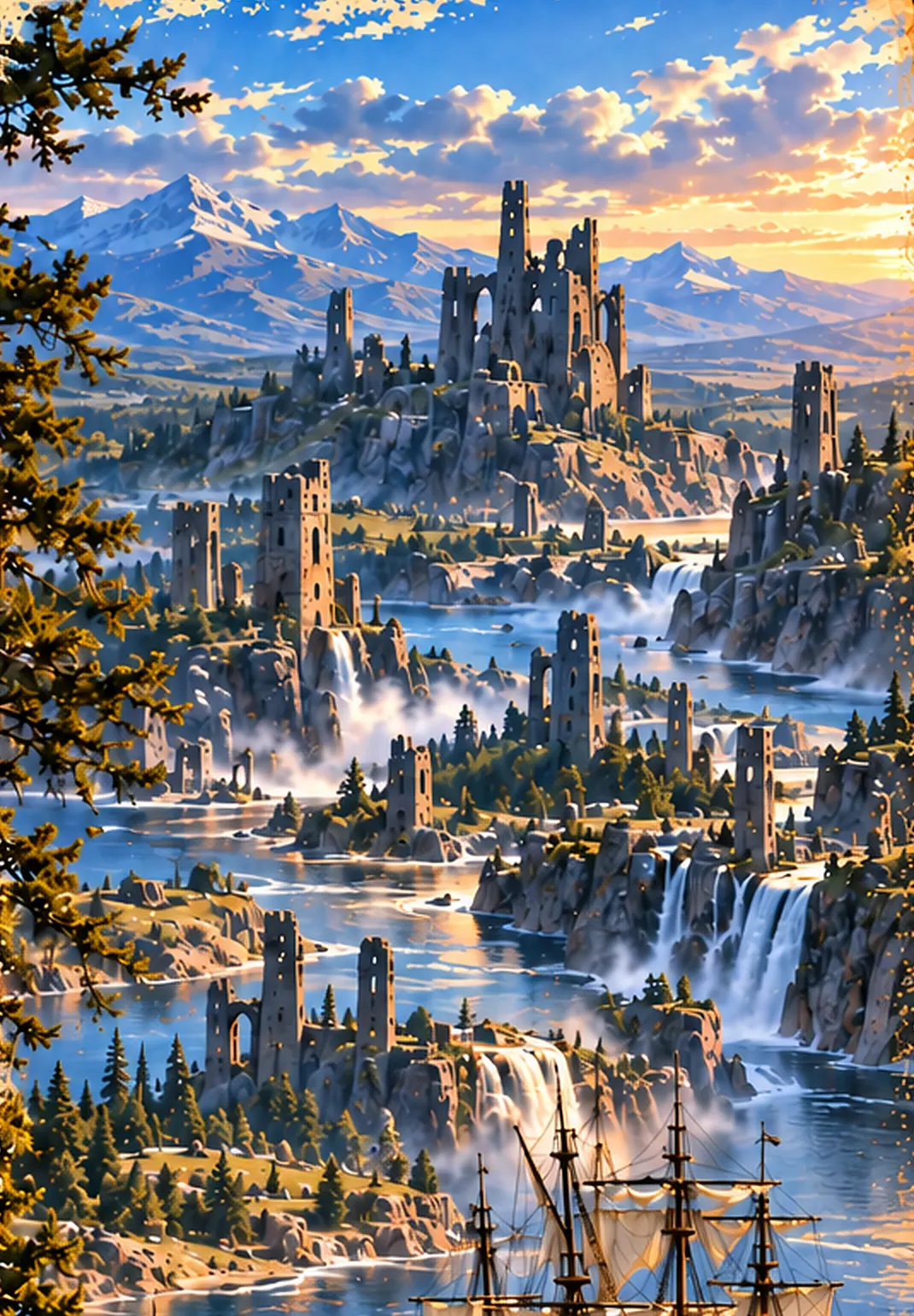
When they arrived. Thirty years ago word spread through the old world that the magic of the old stories was real across the ocean, and the seekers began to arrive by the shipload.
Main city. Hope's Landing, the first seeker town, built thirty years ago where the first seeker ships came ashore. It is a ramshackle port in charter colony territory, a few days' sail from Harrowmouth, full of boarding houses, would-be teachers and outright frauds, and the colonies' witchfinders watch every ship that docks.
What shaped them. They came from every nation of the old world and answer to no crown or company. The Silent Year, 25 years ago, showed them that the Worldsoul can kill as well as reward. Witchfinders hunt them, and the nations are wary of them.
How they live now. They are scattered across the continent, finding work wherever they land and asking anyone who might teach them.
What they want. To learn the Worldsoul. Nothing made with it survives the voyage home, so a seeker who finds what they came for has to stay.


Halfling Homesteads
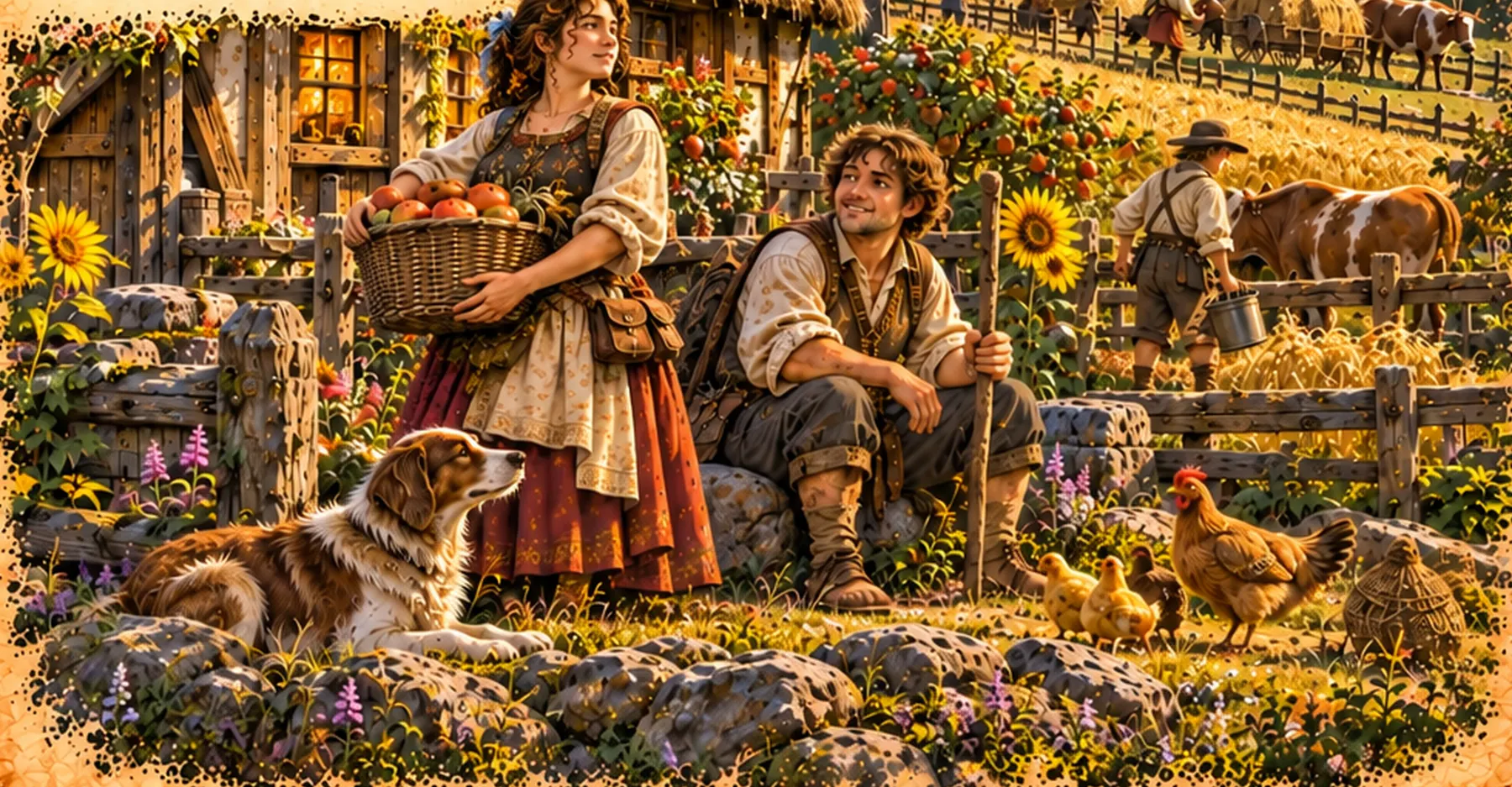
When they arrived. They came across the ocean with the humans, and founded their homesteads 85 years ago on a promise of fair dealing.
Main city. Fairholding, the oldest homestead town, built around the meeting house where the first land was bought.
What shaped them. They bought their land instead of taking it, which has earned them friends among the nations and a reputation for keeping their word, Their hearth magic is small and quiet enough that the witchfinders mostly leave it alone.
How they live now. They are farmers first: field, orchard and byre. They sell grain and livestock to the towns for coin, and among their own homesteads trade work and produce without money changing hands. They carry the sling, the staff and the hatchet.
What they want. To be left alone on land they paid for. The coming war is the thing they fear most, because armies take food, horses and sons whichever side they are on.
The Worldsoul
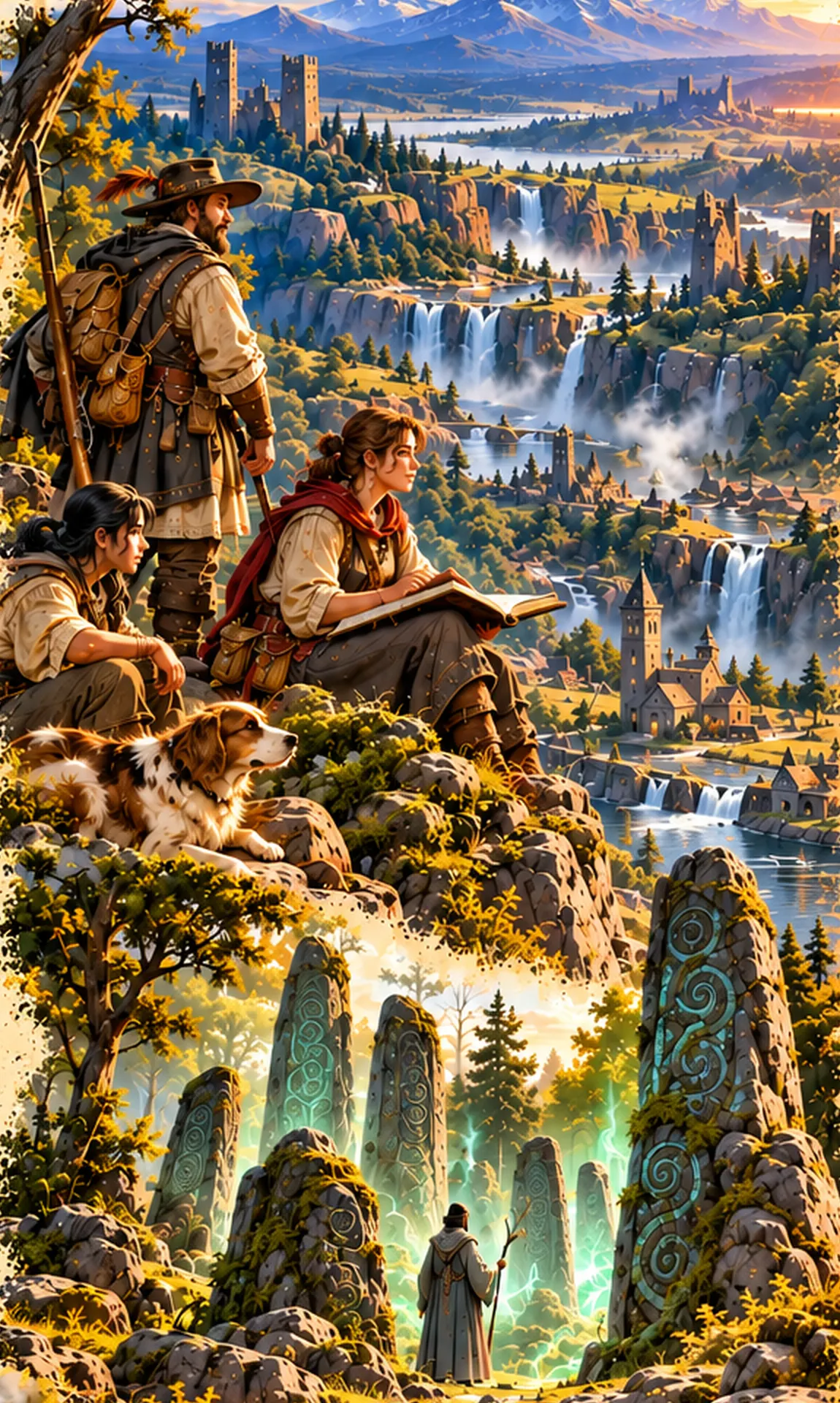
What makes this continent unlike the old world is the Worldsoul, the living breath of the land. Those who know how can work it. In the old world it exists only in stories. Here it is real, and that fact shapes everything.
It is found only here. The old stories say it was once in the old world too. Whether it was used up there or deliberately suppressed, nobody knows, and every faction believes the version that suits it.
Nothing made with it survives the crossing. Spells and rune devices go dead on the Eastern Ocean, so whoever wants the Worldsoul has to stay.
It fouls gunpowder. Guns misfire more often where magic has just been worked.
Its names. Newcomers and traders call it the Worldsoul. Elves call it the Breath or the Soul, dwarves the Deep, and halflings the Hearth. Magic here is real, but it is not common, and it is never loud. An elven Keeper might soothe a fever, hide a trail or turn a fight with a word. A halfling's hearth magic keeps a household fed, warm and safe. A dwarven runewright spends half a year cutting a single rune into a gun lock, and that gun never misfires again. Nobody flies, nobody vanishes, and the dead stay dead. Most people will never see a great working, which is partly why they are feared.
Life on the Frontier
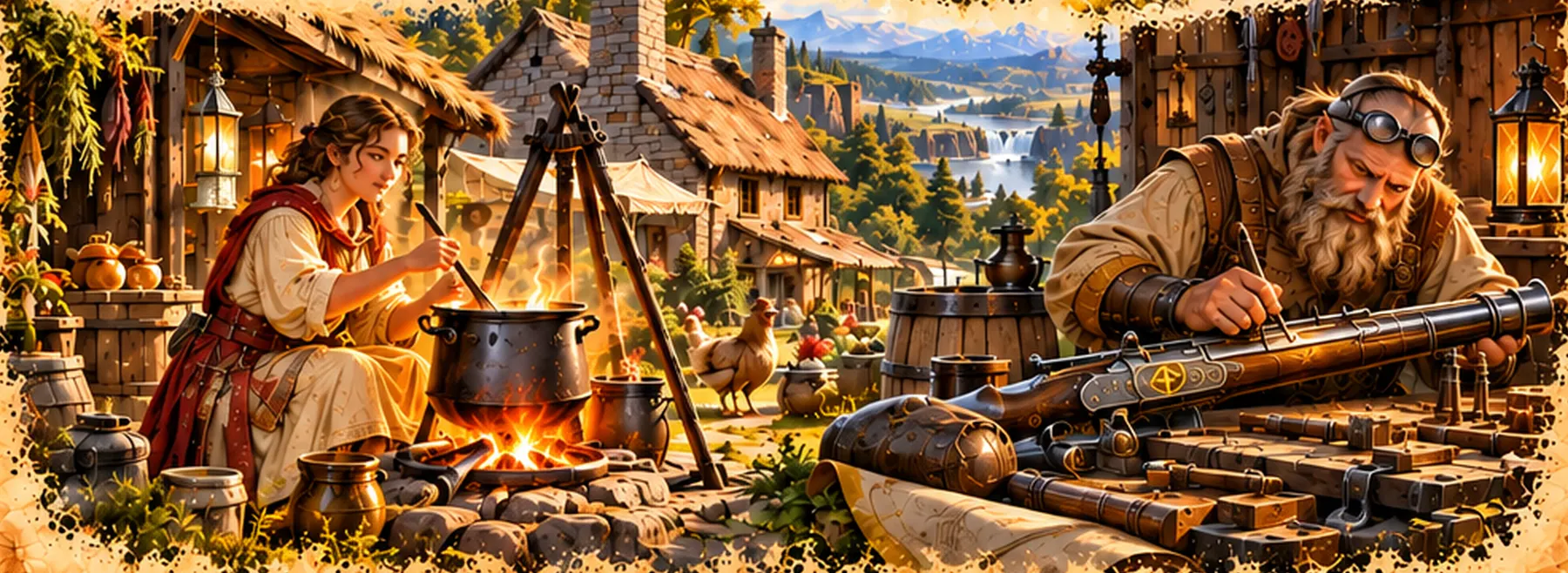
It is a hard country to make a living in. Coin is short and goods are shorter, so a good knife, a wool blanket and a dry pouch of powder are worth caring about. Old swords and mail hang beside new muskets, because a musket is slow to load and costs a month's wages, and because the elves and dwarves never took up powder at all. Distances are long, winters kill, and the nearest magistrate may be three weeks away.
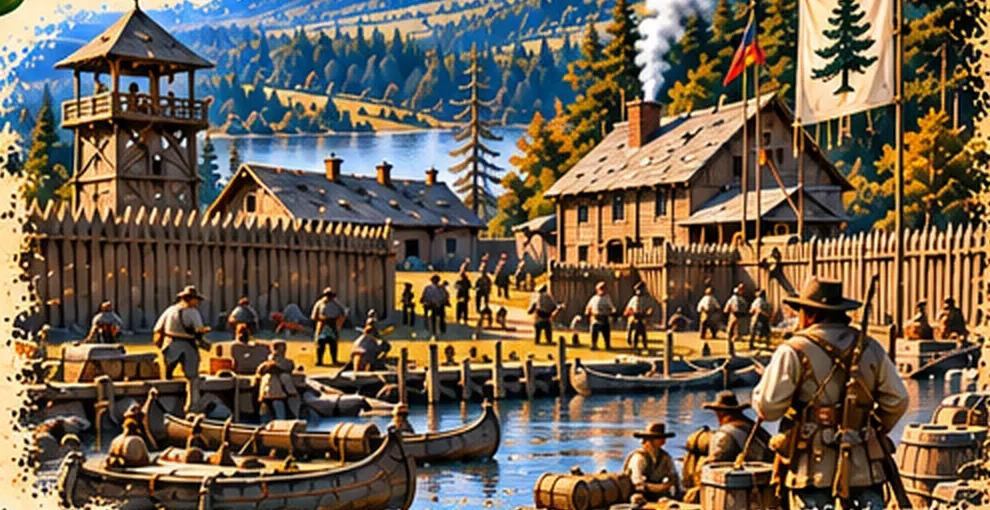
Settlements. Beyond the coast, a settlement is a fort, a trading post, a mission or a cluster of farms behind a stockade. Most hold a few dozen people. A town with a church, a smithy and a tavern is a day's talk for anyone who has seen one.
Getting about. There are few roads. People travel by trail, by river and by portage, a week or more between posts. Most news comes by canoe, by pack train or by whoever happens to be walking the same way, and it is often months old wien it arrives.
Law. Each power keeps its own law where it can enforce it, and nobody's law reaches far into the forest or onto the plains. Out there, disputes are settled by custom, by a council of the nearest nation, or by whoever has more friends. Thief-takers and witchfinders carry warrants that mean something only where people choose to honour them.
Trade. Most business is done in goods, not coin: pelts, powder, steel, blankets, kettles and beads. A trapper may not see a silver piece from one season to the next. A fair trader is remembered, and so is a cheat.
The seasons. Spring brings floods and the fur fleets coming downriver. Summer is for travel, trade and war. Autumn is the harvest and the last journeys before the snow. Winter shuts the trails, freezes the rivers and empties the larder; a settlement that has not laid in enough food will not see the thaw.
Danger. Raiders, bandits, deserters, winter and sickness kill more people than any war. Where the Worldsoul runs strong, the beasts are stranger and bolder than anything in the old world; see chapter 15, Creatures of the new world.
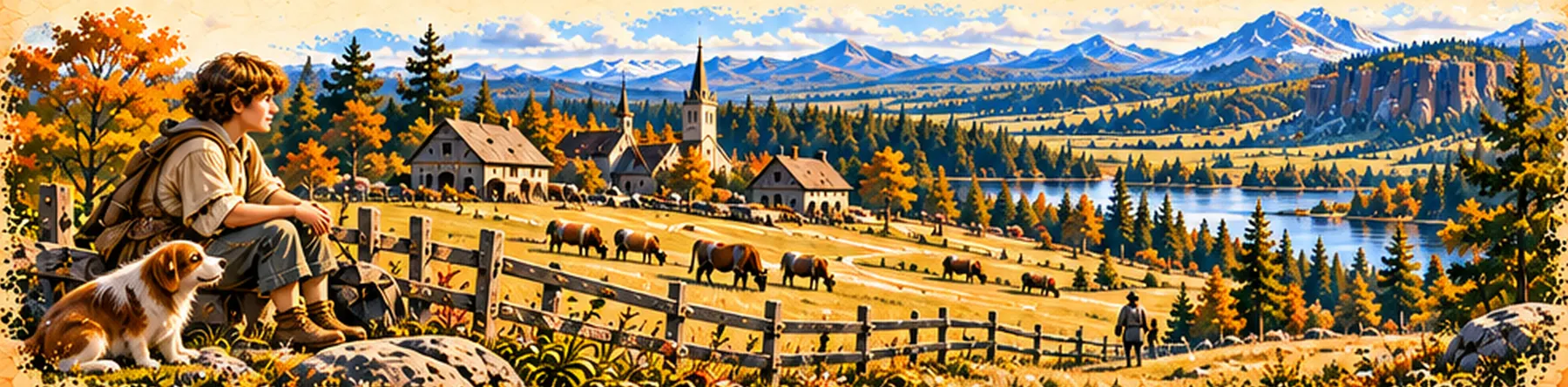
Neighbours. Settlements are scattered, and the nearest neighbour may be a day's travel or more away: a halfling homestead, a forest elf village, a trading post, a colonial farm. Neighbours come together when they need to, for a harvest, a sickness, a raid or a trade, and sometimes they marry across those lines. The rest of the time no one is made to deal wit the people next door, and many go a season without seeing them. On the frontier a person can keep to themselves, and most are left to.
A History of the New World
Dates are given in years before the present day.
Before the ships
| When | What happened |
|---|---|
| Beyond memory | The Worldsoul fades from the old world, and survives there only in stories. |
| Ancient | The shore dwarves work the lake copper and cut the first runes into it. |
| 900 years ago | The mound cities of the river elves rise along the great river and its tributaries. |
| 800 years ago | The canyon dwarves build their cliff and mesa towns, and tie their rune-craft to water and stone. |
| 550 years ago | The mound cities empty within a single lifetime. The river elves take to their boats and will not say why. |
| 350 years ago | Five forest elf nations end their wars and found the League under a single law. |
First contact
| When | What happened |
|---|---|
| 190 years ago | Ships of the southern crown reach the southern islands, looking for a trade route and finding a continent. |
| 175 years ago | The southern crown topples the rich kingdoms of the far south and ships home their silver. The silver piece becomes the coin of the whole continent. |
| 165 years ago | The Turning Back. A crown army marches into the eastern forest. The forest Keepers call down a storm that lasts nine days, and the few who come out alive tell of trees that closed behind them. No crown has tried to take the forest by force since. |
| 160 years ago | Armed expeditions of the southern crown march north through river elf country and into the canyons, hunting for cities of gold and finding the Worldsoul instead. Sickness follows the columns and empties whole valleys. |
| 155 years ago | The first Worldsoul-wrought treasures sent home across the ocean arrive as dead metal. The southern crown declares the Worldsoul a deceit and orders it rooted out. |
The Colonies
| When | What happened |
|---|---|
| 130 years ago | The charter colonies land on the eastern shore under royal charters, to grow cash crops for the home market. |
| 120 years ago | The river traders found a post on the northern river and send young men inland to live and trade among the forest peoples. Their captain fires the first gun ever used against the League. |
| 120 years ago | The southern crown plants missions and garrisons among the canyon dwarves and forbids rune-craft. |
| 110 years ago | The merchant company buys an island harbour and sells guns to the League in exchange for furs. |
| 100 to 65 years ago | The Pelt Wars. Armed with company guns, the League fights its neighbours, the river traders and the charter colonies for the fur country. Half the frontier towns burn. |
| 90 years ago | The Mill at Three Falls. The merchant company pays the shore dwarves to cut a great engine-rune into a mill. It runs day and night for nine years, then tears itself and the town around it apart. Shore dwarves have refused to cut great runes for outsiders ever since. |
| 85 years ago | The halfling homesteads are founded on a promise of fair dealing, and buy their land instead of taking it. |
| 80 years ago | The home governments rule that colonial goods may travel only in their own ships to their own ports. Smuggling becomes a trade in its own right. |
| 75 years ago | The Burnings. Witchfinders in the charter colonies try and hang dozens for working the Worldsoul, most of them their own settlers. |
| 70 years ago | The charter colonies seize the merchant company's island harbour. The company keeps its counting houses and its contacts, and trades on under another flag. |
| 65 years ago | The Great Peace ends the Pelt Wars. The League makes peace with the river traders and thirty other nations, and declares itself neutral between the crowns. |

Living Memory
| When | What happened |
|---|---|
| 45 years ago | The Rising. The canyon dwarves revolt as one, drive the southern crown out for twelve years and relight the rune-forges. Loosed herds from the abandoned ranches spread north, and the plains elves become the finest riders on the continent. |
| 40 to 32 years ago | The Crowns' War. The crowns fight each other across the ocean and the continent. It ends in a treaty signed in the old world that redraws borders nobody here agreed to. |
| 33 years ago | The southern crown retakes the canyons, but on terms: the rune-forges stay lit behind closed doors. |
| 30 years ago | Word spreads through the old world that the magic of the old stories is real across the ocean. Shiploads of seekers arrive, answerable to no crown, and the first of them build Hope's Landing where their ships came ashore. |
| 25 years ago | The Silent Year. A circle of seekers goes to an old mound site by the great river to work the Worldsoul there. None of them is seen again, and the boat-clans will not go near the place. |
| 20 years ago | The river traders build a chain of forts down the great river to join their northern and southern holdings. |
| 8 years ago | A fortress of the river traders falls to colonial militia and is handed back by treaty, to the fury of the charter colonies. |
Longer memories. Living memory here means a human lifetime. Elves can live to about 300 years and dwarves to about 200, so their oldest remember much further back. An old elf may have watched the first crown ships arrive 190 years ago, or stood in the forest during the Turning Back. An old dwarf may remember the crown's missions coming to the canyons, 120 years ago. Halflings live about as long as humans. Even the oldest elf alive was not born when the mound cities emptied.

The Present Day
War. The game begins on the eve of a war. Surveyors from the charter colonies and soldiers of the river traders are pushing into the same river valley, and the League is being pressed to choose between them. Everyone expects war. Nobody else can stay out of it for long.
Rivals. The southern crown would be glad to see its rivals bleed each other, and the merchant company will sell powder to whichever side pays.
Frontier. The plains elves want the fighting kept off their grass, the dwarves want it kept away from their forges, and the halfling homesteads lie in the path of any army that marches west.
Old troubles. Meanwhile the old troubles have not gone away. Witchfinders still hunt those who work the Worldsoul, seekers still arrive by the shipload looking for teachers, and the strange beasts of the Worldsoul still roam where it runs strong.
Worse. A war would make all of it worse.

Characters. Characters are the people who move through the gaps: woods runners and trappers, envoys and thief-takers, soldiers who have left the ranks, Keepers with something to protect, and newcomers who came looking for the magic of the old stories and have begun to find it.
