SkillsChapter the Fourth
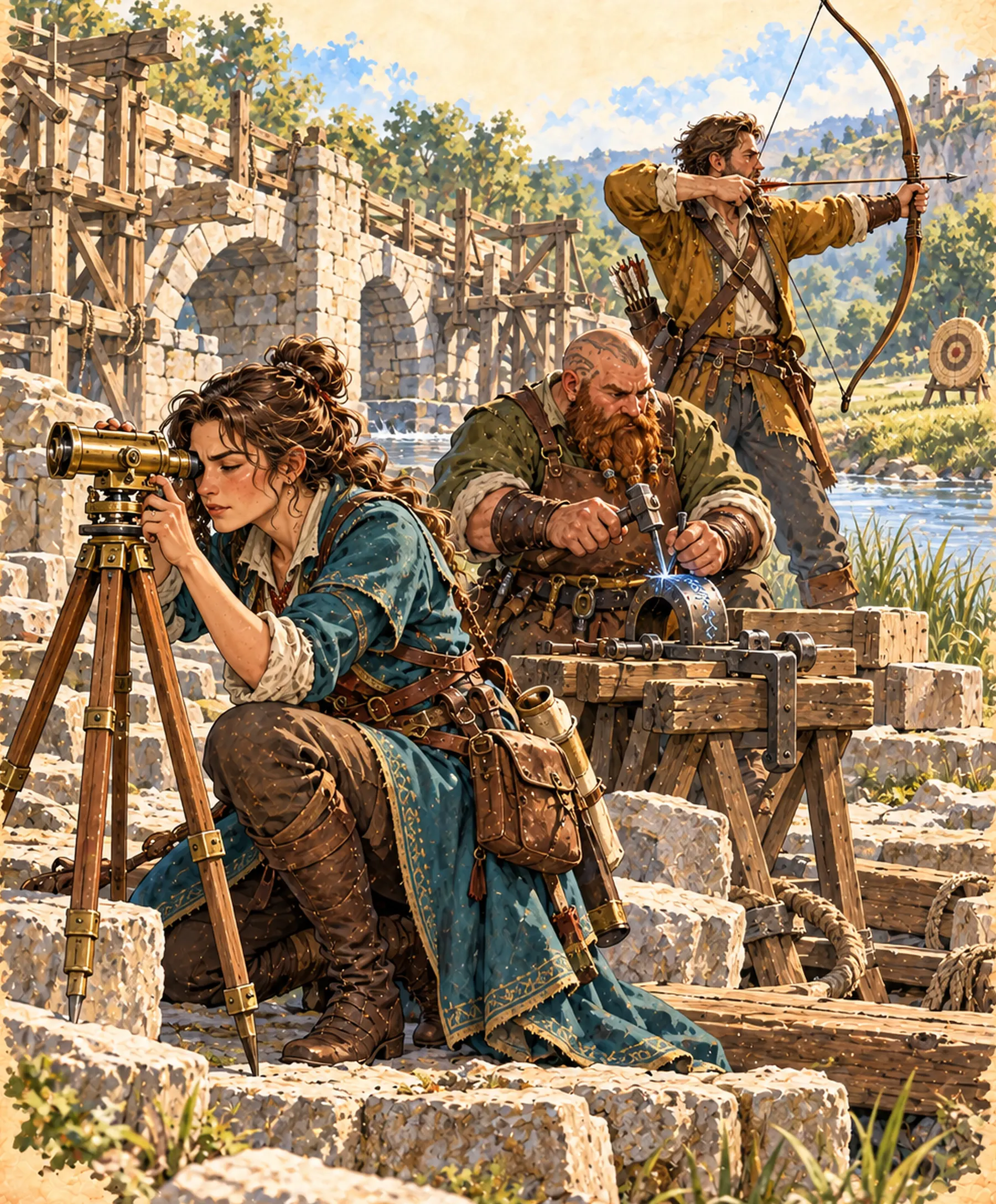

Skills
There are 22 skills. An asterisk marks an advanced skill or group.
| Skill | Characteristic |
|---|---|
| Acrobatics | AGI |
| Animal Handling | PRE |
| Athletics | MIG |
| Boating | AGI |
| Deception | PRE |
| Deduction | INT |
| Deftness* | AGI |
| Hearth Magic* | PRE |
| Insight | WIT |
| Intimidation | PRE |
| Knowledge* (grouped) | INT |
| Melee (grouped) | MS |
| Perception | WIT |
| Performance | PRE |
| Persuasion | PRE |
| Ranged (grouped) | RS |
| Resist (grouped) | END or RES, by group |
| Rune Magic* | INT |
| Soul Magic* | RES |
| Stealth | AGI |
| Survival | WIT |
| Treat Wounds* | INT |
Basic and advanced skills
Every skill, and every group of a grouped skill, is either basic or advanced. An asterisk marks the advanced ones.
Basic skills

Basic skills are things anyone can attempt with no training, such as climbing, sneaking, bargaining or noticing something. A character without a rank rolls at -1. A basic skill outside your career can still be learned, at triple the cost.
Advanced skills
Advanced skills need real training: picking a lock, treating a wound, recalling, scholarship or working magic. A character without a rank rolls at -2, and a failure always costs something: a mishap, a fumble or a disaster, depending on how badly the roll fails. See Untrained advanced rolls.
Advanced skills are career-bound
An advanced skill or group can only be learned while it is on your current career's lists. One learned in an earlier career is kept, but cannot be raised any further.
Magic skills
Magic skills are advanced, and each belongs to a single career: Hearth Magic to the Hearthwarden, Rune Magic to the Runewright and Soul Magic to the Keeper. No one else can learn them, and they cannot be attempted untrained.

Weapon groups
Weapon groups follow the same split. Lacking a basic group is -1 on the attack and lacking an advanced one, such as Bows or Firearms, is -2.
In play
In play, basic skills are where a group shares the load: anyone can try to climb the wall or calm the horse. Advanced skills are where a party leans on its specialists, because an untrained attempt is both harder and riskier.
Adaptable
Adaptable, the human species talent, gives a human one more basic skill at Familiar when the character is made, from outside their career. See Starting skills in chapter 1.

Skill descriptions
Each skill is rolled as 2d6 + its characteristic + rank, against a difficulty the GM sets. The characteristic is shown in brackets. Skills marked * are advanced skills.
Acrobatics (Agility)
Balance, tumbling, breaking a fall, slipping out of a grip and keeping your feet when something tries to knock you over. Rolled to cross a narrow beam, to roll clear of a stampede or a beaver's tail, and to dodge with Dodge Blow.
Animal Handling (Presence)
Calming, handling, training and riding animals. Rolled to keep a horse steady under fire, to quiet a guard dog, to drive a pack mule across a river or a team and wagon down a rutted trail, or to ride hard over rough ground.

Athletics (Might)
Climbing, swimming, jumping, lifting, forcing and running long distances. Rolled to scale a cliff, swim a flooded river, force a stuck door or keep up a forced march.

Boating (Agility)
Handling canoes, boats and ships: paddling, rowing, steering, reading a river's current, running rapids and keeping a boat upright in rough water. Rolled to shoot a rapid, outrun a pursuing canoe, land on a dark shore or bring a boat through a storm. Carrying a canoe over a portage is Athletics.
Deception (Presence)
Lying, bluffing, disguise and sleight of word. Rolled against the listener's Insight when you tell a lie that matters, pass false papers or hide what you know.
Deduction (Intellect)
Working things out from clues. Rolled to piece together what happened at a scene, find the pattern in a set of accounts, crack a cipher or spot the flaw in a plan.
Deftness* (Agility)
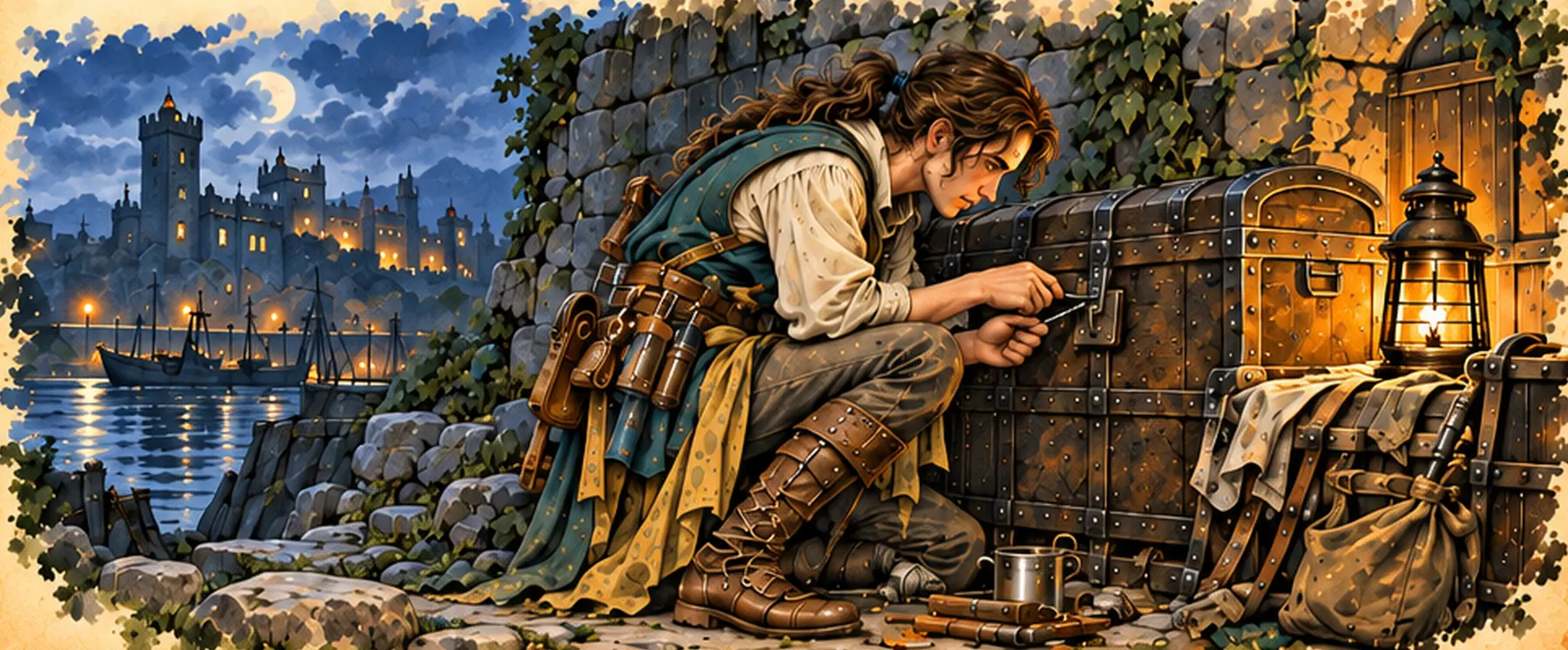
Fine work with the hands: picking locks, disarming traps, picking pockets, palming objects and delicate repairs. An advanced skill, so an untrained attempt rolls at -2 and a failure always costs something.
Hearth Magic* (Presence)
The halfling magic of home and table, used to cast Hearth Magic spells. Only a Hearthwarden can learn it. See chapter 10, Magic.
Insight (Wits)
Reading people. Rolled to tell when someone is lying, to sense what they want or fear, and to judge whether a stranger means harm. It is the roll that opposes Deception.
Intimidation (Presence)
Getting your way through threat and force of personality. Rolled to make a prisoner talk, back down a bully, or make a crowd part for you.
Knowledge* (Intellect)
What a character has learned, in fifteen separate fields such as History, Law or Nature. Rolled to recall a fact, recognise something, or know how a thing is done. The GM rolls untrained Knowledge in secret. The fields are listed in Grouped skills.
Melee (Melee Skill)
Fighting hand to hand, in six weapon groups. Rolled as the attack roll in melee. See chapter 8, Combat.
Perception (Wits)
Noticing things with any of the senses. Rolled to spot an ambush, hear someone on the stairs, find a hidden door or catch a smell on the wind.

Performance (Presence)
Entertaining an audience: music, song, storytelling, acting and clowning. Rolled to earn coin in a tavern, hold a crowd's attention, or keep eyes on you while a friend works.
Persuasion (Presence)
Winning people over honestly, with argument, charm and bargaining. Rolled to strike a deal, win a favour, calm a quarrel or ask a teacher to take you on.

Ranged (Ranged Skill)
Shooting and throwing, in five weapon groups. Rolled as the attack roll with a ranged weapon. See chapter 8, Combat.
Resist (Endurance or Resolve)
Holding out against harm and pressure, in eight groups. The Endurance groups resist disease, hardship and poison. The Resolve groups resist coercion, enchantment, fear, pain and temptation. Rolled when something tries to make you sicken, falter, break or give in. Hardship covers cold, heat, hunger, thirst, lack of sleep and exhaustion.

Rune Magic* (Intellect)
The dwarven craft of cutting runes into made things. It is rolled only to make a rune device, as downtime work. Only a Runewright can learn it. See chapter 10, Magic.
Soul Magic* (Resolve)
The elven working of the Worldsoul, used to cast Soul Magic spells. Only a Keeper can learn it. See chapter 10, Magic.
Stealth (Agility)
Moving unseen and unheard, and hiding. Rolled to creep past a sentry, shadow someone through a town, or lie hidden while searchers pass.
Survival (Wits)
Living off the land and finding your way through it. Rolled to track, hunt, forage, find water and shelter, read the weather and keep your bearings.
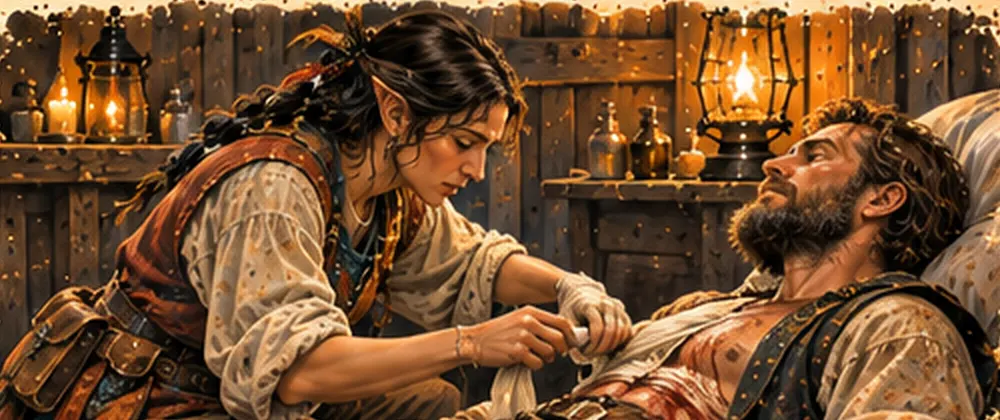
Treat Wounds* (Intellect)
Field medicine and surgery. Rolled for first aid, to tend a patient through the night, and to treat critical wounds. See Healing in chapter 9, Injury and recovery.
Ranks
A skill's rank shows how much training and practice lies behind it. The rank's modifier is added to every roll with the skill.
| Rank | Modifier | What it represents |
|---|---|---|
| Untrained, advanced | -2 | No training in something that needs it. The character is guessing, and a failure always costs something. |
| Untrained, basic | -1 | No training, but anyone can have a go. |
| Familiar | 0 | The basics, picked up on the job. Enough to get by in ordinary conditions. |
| Trained | +1 | Properly taught and regularly practised. A dependable hand at the work. |
| Expert | +2 | Years of experience. Others come to this character for advice. |
| Master | +3 | One of the best in the land. Few can match them, and fewer can teach them anything. |
Characteristic + skill rank can never exceed the roll limit of 9, or 10 for the skills of a characteristic with a cap talent. Master rank (+3) therefore reaches its full value only with a characteristic of 6 or lower, or 7 with a cap talent.
Primary and secondary skills
Every career lists its primary skills and its secondary skills under its entry in chapter 3, Careers. A character's primary and secondary skills are the ones their current career lists. Change career and they change with it.
- Primary skills are the heart of the career, the work its members do every day. They are the cheapest to advance.
- Secondary skills are useful to the career but not its focus. They cost double.
- Skills outside the career are every skill the career does not list. A basic skill outside the career costs triple. An advanced skill outside the career cannot be learned at all.
| Rank | Primary skill | Secondary skill | Basic skill, outside the career |
|---|---|---|---|
| Familiar | 1 | 2 | 3 |
| Trained | 1 | 2 | 3 |
| Expert | 2 | 4 | 6 |
| Master | 3 | 6 | 9 |
| Total to Master | 7 | 14 | 21 |

- New characters start at Familiar in every primary and secondary skill of their first career, and raise one primary skill to Trained for free. See Starting skills and Starting advances in chapter 1.
- Spending experience on skills is covered in more detail in chapter 7, Advancement.
Grouped skills
A grouped skill is written on the sheet once per group, as in Melee (Basic), and each group, such as Melee (Basic) or Melee (Polearms), is learned and ranked separately. The sheet leaves three rows for each.
A career lists either one named group or (all). With (all), every group of that skill is a career skill. Only Melee and Ranged can be listed as (all); Knowledge fields and Resist groups are always named.
| Skill | Groups |
|---|---|
| Knowledge* [INT] | Alchemy, Arcana, Arts, Commerce, Cultures, Engineering, Geography, History, Law, Medicine, Nature, Politics, Religion, Streetwise, Warfare |
| Melee [MS] | Basic, Brawling, Flexible*, Polearms*, Staves, Two-Handed* |
| Ranged [RS] | Artillery*, Basic, Bows*, Crossbows, Firearms* |
| Resist [END] | Disease, Hardship, Poison |
| Resist [RES] | Coercion, Enchantment, Fear, Pain, Temptation |
- Melee (Basic) covers all one-handed melee weapons. Ranged (Basic) covers slings and thrown weapons.
- A weapon group you lack rolls at -1, or -2 if the group is advanced.
Untrained advanced rolls - The Mishaps Table!
An untrained attempt at an advanced skill or group rolls at -2, and a failure always costs something.
| Failed by | Result |
|---|---|
| 1-2 | Mishap |
| 3-4 | Fumble |
| 5 or more | Disaster |
The GM decides what each result means, to fit the situation. A mishap is a setback, a fumble makes things worse, and a disaster causes real harm. Some examples:
| Skill and task | Mishap (failed by 1-2) | Fumble (failed by 3-4) | Disaster (failed by 5 or more) |
|---|---|---|---|
| Deftness: picking a lock | It takes ten times as long, and makes enough noise to be heard in the next room. | A pick snaps off inside the lock. No one can pick it now; it must be forced or broken. | The lock jams for good, and the noise brings the household or the guards running. |
| Treat Wounds: first aid after a fight | The dressing slips. The patient regains nothing. | You open the wound further. The patient loses 1 Wound. | The wound turns bad. The patient loses d3 Wounds, and their next night's rest counts as a poor one. |
| Knowledge (Alchemy): identifying a potion | You cannot tell what it is. | You are sure it is something it is not. The GM gives you a false answer. | You taste it to be certain, and suffer its full effect. |
| Melee (Two-Handed): an attack with a great axe | The heavy swing pulls you off balance. Your Melee Defence is 1 lower until your next turn. | The axe bites deep into the floor or a post. You lose your next half action pulling it free. | The axe flies from your grip and lands d6 paces away, and you fall prone. |
The GM should roll untrained Knowledge checks in secret, so a fumble can give false information.
Examples of play
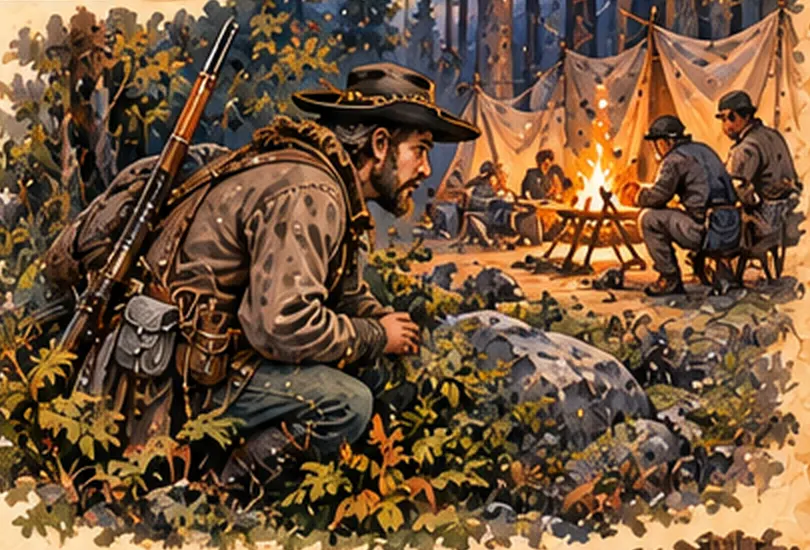
Stealth. Tomas, a Trapper, needs to slip past a camp of sleeping raiders in the woods. The GM sets Medium (11). Tomas has Agility 3 and Stealth at Trained (+1), and the Rover talent gives him +1 to Stealth in wilderness. He rolls 7 on 2d6: 7 + 3 + 1 + 1 = 12. He beats 11 and is past the camp before anyone stirs.
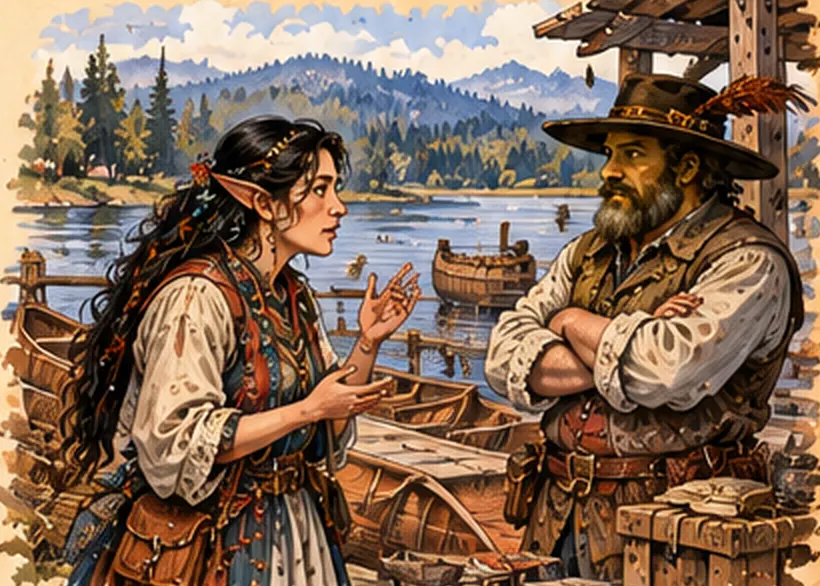
Persuasion. Celeste, an Envoy, is bargaining for canoes with a wary river trader. The GM sets Hard (13), because the trader would rather not sell. Celeste has Presence 4 and Persuasion at Expert (+2), and the Dealmaker talent gives +1 when bargaining. She rolls 6: 6 + 4 + 2 + 1 = 13. She meets the difficulty exactly, which is enough, and gets her canoes at a fair price.
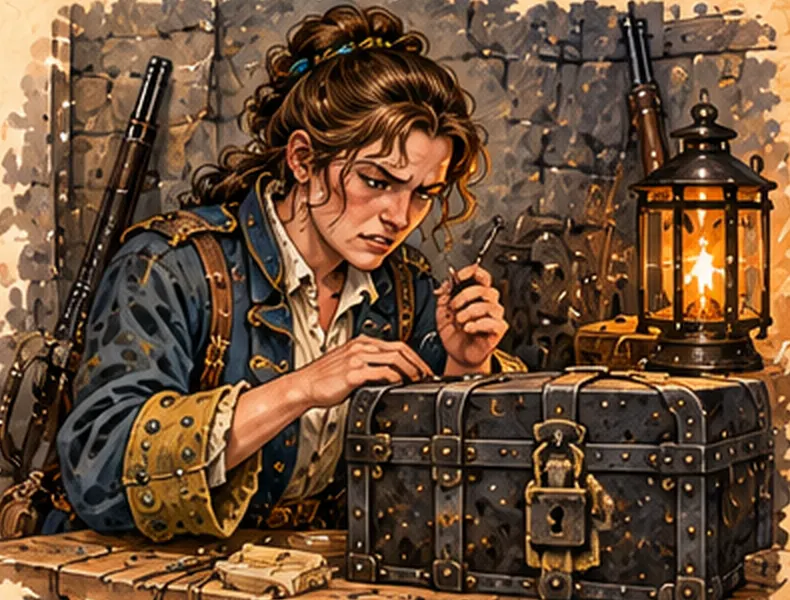
Deftness, untrained. Ruth, a Soldier, finds a locked strongbox and tries to pick it with a bent nail. The GM sets Medium (11). Ruth has Agility 3 but no Deftness, and Deftness is an advanced skill, so she rolls at -2. She rolls 7: 7 + 3 - 2 = 8. She fails by 3, which is a fumble: the nail snaps off inside the lock, and now no one can pick it.
Survival, with and without a roll. Jacob, a Woods Runner, is tracking a wounded crown stag. He has Wits 4, Survival at Trained (+1) and the Hunter's Eye talent. The trail is fresh and bloody, so the GM sets Easy (9). Because a talent applies and Jacob has at least Familiar rank, he follows it without rolling. Overnight it rains. The next morning the GM sets Hard (13), and Jacob must roll. He rolls 7: 7 + 4 + 1 + 1 = 13, and picks up the trail again.