DowntimeChapter the Fourteenth

Downtime
Between adventures, characters heal, train, work and look after their affairs. This chapter covers what they can do with that time.
How downtime works
Weeks
Downtime is counted in weeks. The GM says how long the gap between adventures is, usually from one week to a season (about thirteen weeks).
One activity a week
Each character chooses one activity for each week of downtime, from the sections below. Some activities, such as recovering from a wound or making a rune device, take several weeks in a row.
Living costs
Every week of downtime costs a character their keep. Choose a standard of living and pay it each week, in coin or in goods.
| Living | Cost a week | What it means |
|---|---|---|
| Poor | 5 bits | A corner of a barn, plain food, mended clothes. |
| Common | 1 piece | A bed in a boarding house or a share of a cabin, and decent meals. |
| Comfortable | 3 pieces | A private room, good food, clean linen and a seat by the fire. |
A character who cannot pay
lives poor and owes the difference, or lives rough: no shelter, and every night's rest counts as a poor one.
Experience
is spent during downtime; see chapter 7, Advancement.
Recovering
Wounds and Fatigue
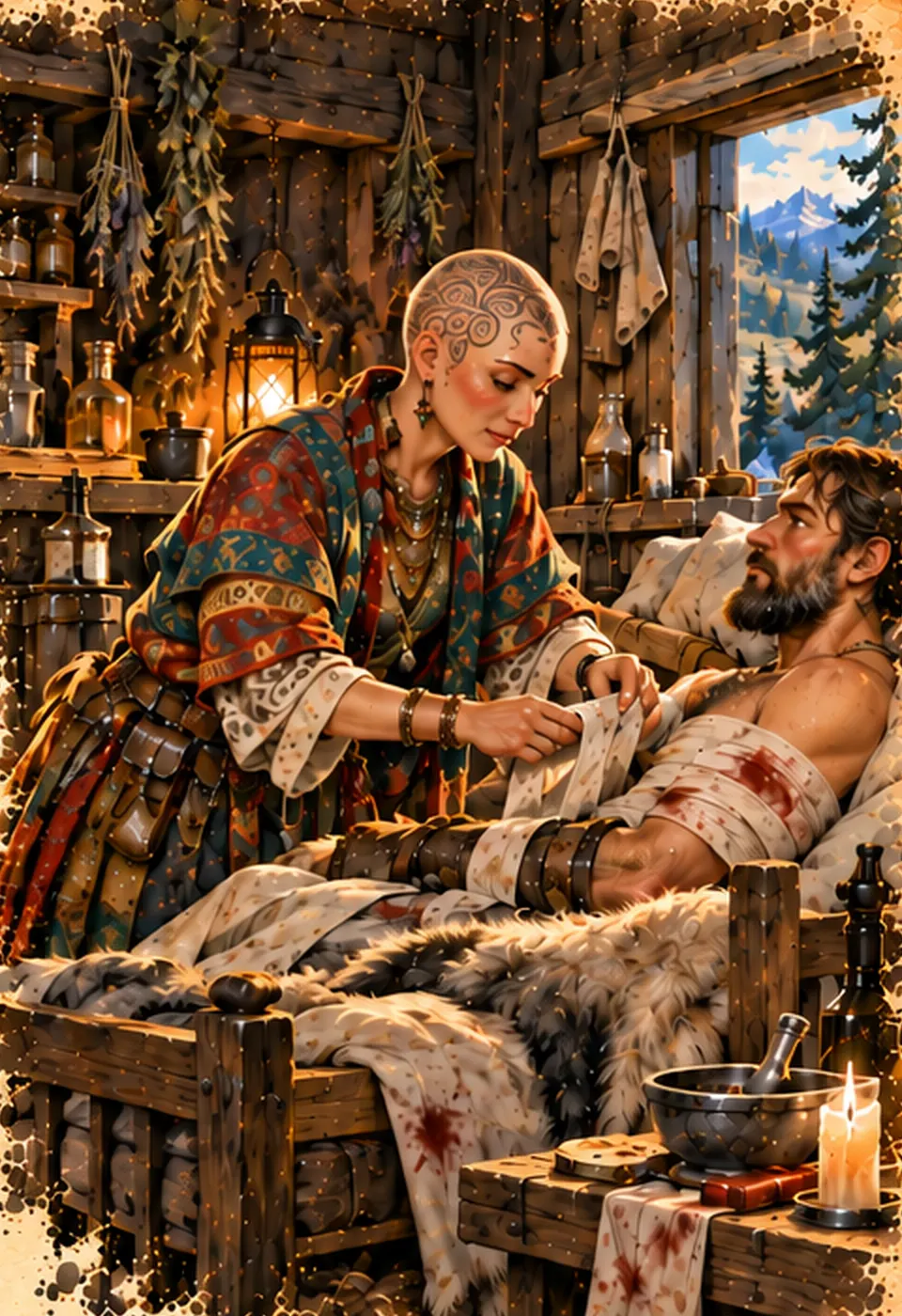
A week of rest restores all Wounds and clears all Fatigue, ritual Fatigue included.
Critical wounds
A wound that lasts a week heals in one week of downtime, and a wound that lasts a season in thirteen. A successful Treat Wounds roll halves the time, as in Healing in chapter 9.
Resting counts
A character who is recovering from a critical wound can still take a light activity that week, such as seeking out or standing and favours, but not training, making things or earning a living by hard work.
Care costs
A surgeon's or nurse's care costs about 1 piece a week on top of living costs, unless a companion with Treat Wounds tends the patient.
Training and learning
Changing career
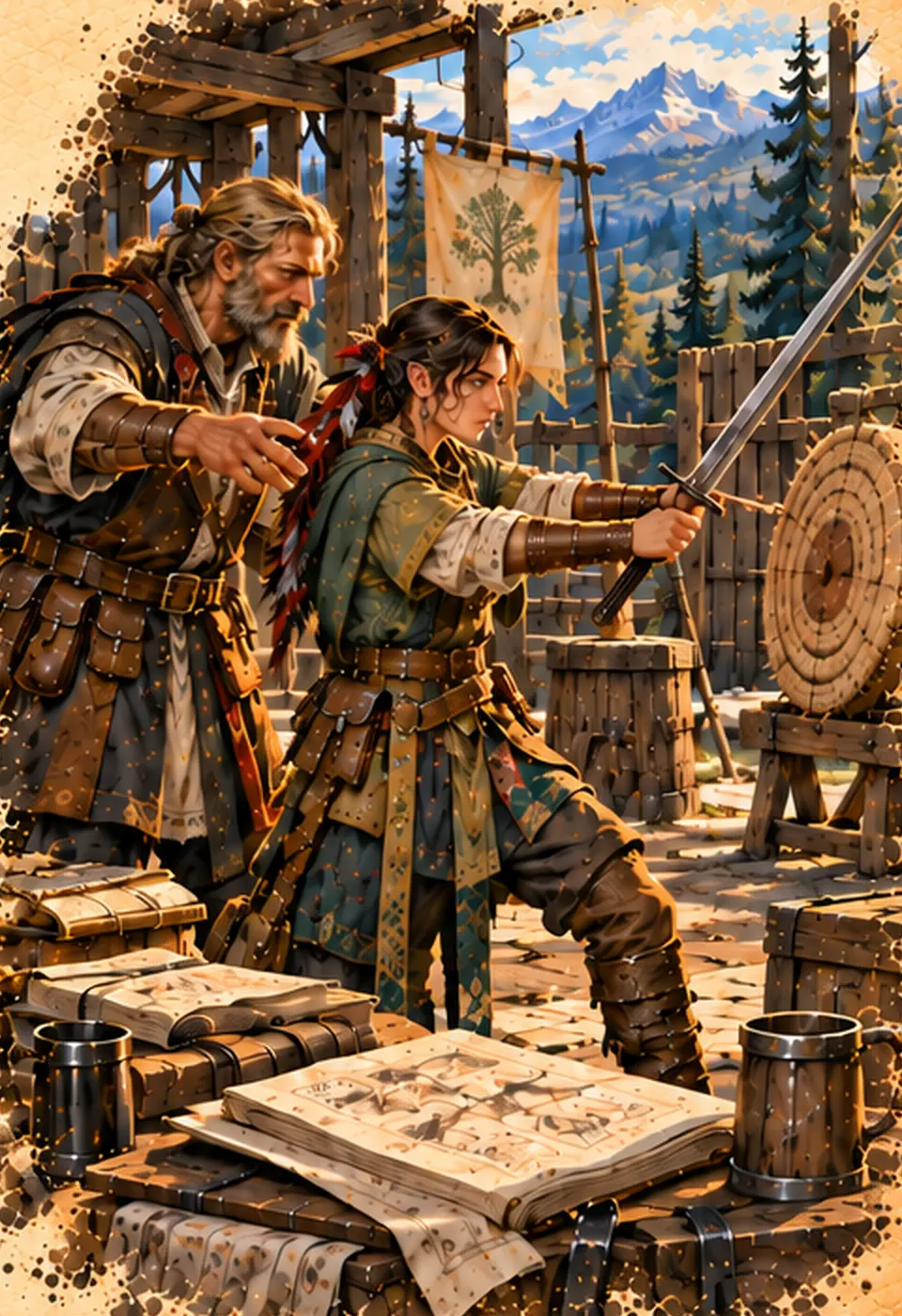
The three requirements are in Changing career in chapter 3: the trappings, a trainer and 3 experience. Training takes 4 weeks with the trainer, or a season for the three magic careers. A trainer usually wants paying: 1 piece a week, or a favour.
Learning a spell or rune
Find a source and pay its price, as in Learning spells and runes in chapter 7. Learning then takes 1 week for a Very easy or Easy spell or rune, 2 weeks for Medium, 4 for Hard, 8 for Very hard, and a season for Nearly impossible.
Finding a teacher
is itself a week's work; see Seeking out, in this chapter.
Making things
Rune devices
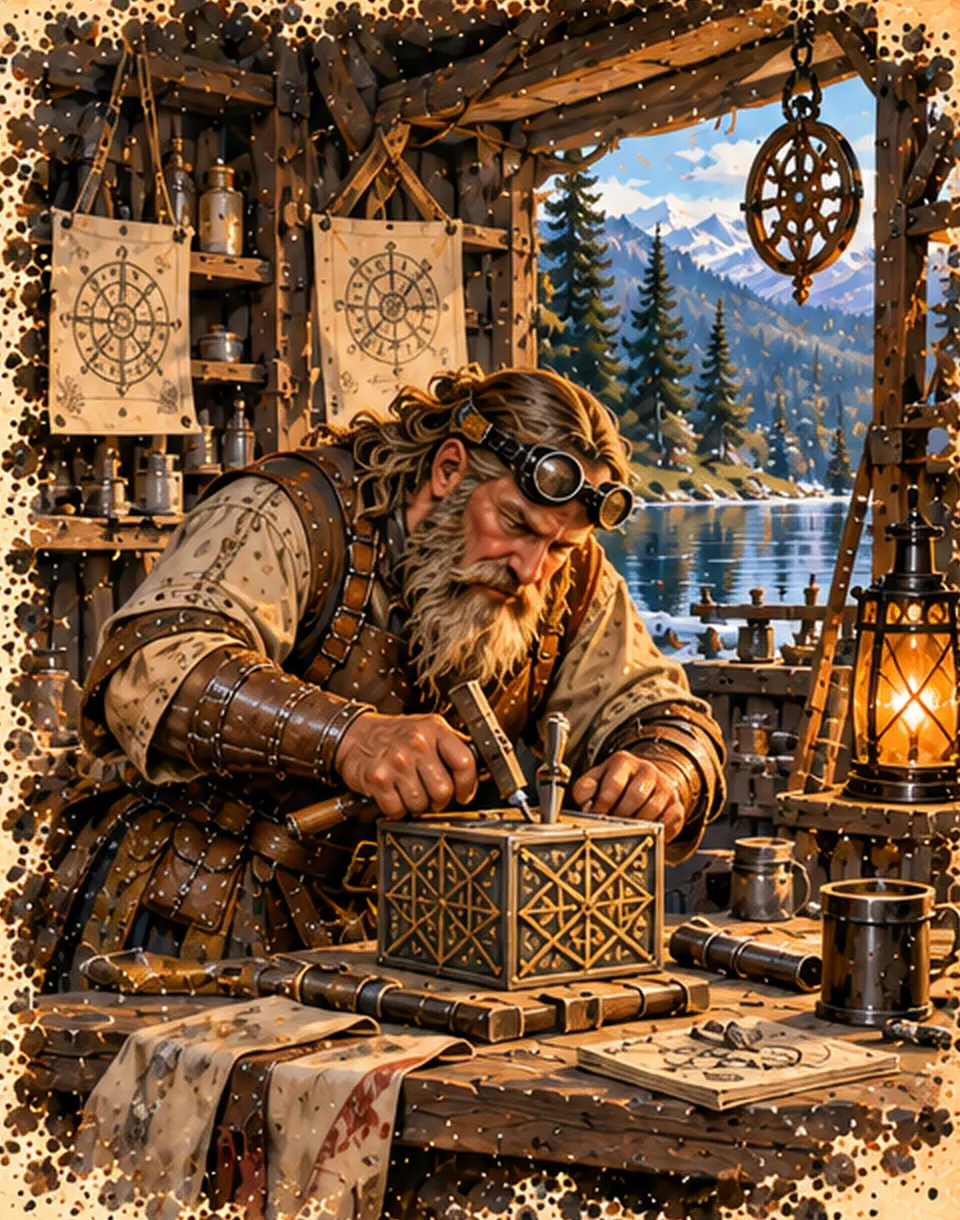
A runewright makes a rune device in the making time shown in Rune Magic costs, in chapter 10, and needs the materials before starting. Each week of making uses that week's activity.
Ordinary crafting
A character with a suitable skill can make or mend ordinary goods. A week of work makes or repairs goods worth up to 2 pieces, using materials that cost half that. Examples: twenty arrows (Survival or Deftness), a mended mail shirt (Deftness), a set of snowshoes (Survival).
Larger work
Something bigger, such as a birchbark canoe or a log cabin, takes several weeks and the GM sets the time and the roll.

Earning a living
Working your trade
Roll one of your career's primary skills, at Medium (11). On a success, earn 2 pieces for the week, plus 1 for each 2 points of margin. On a failure, earn 1 piece. On a failure by 5 or more, earn nothing and something goes wrong: a lost tool, a dispute with an employer, a bad reputation in town.
Labouring
Any character can work as a labourer for 2 pieces a week without a roll.
Trapping
In the cold months, a trapper on their lines rolls Survival at Medium each week. On a success, they take 1 prime pelt plus 1 for each point of margin, to a maximum of 6. Each pelt sells for 1 piece at a trading post. A trapper living on the line pays poor living costs, from the land.
Trading
Goods bought at coast prices can be sold in the back country for more. A character who spends a week trading rolls Persuasion at Medium. On a success, they sell at one and a half times the coast price; with a margin of 3 or more, at double. On a failure, they sell at cost. On a failure by 5 or more, they sell at half the coast price, or not at all.
Seeking out
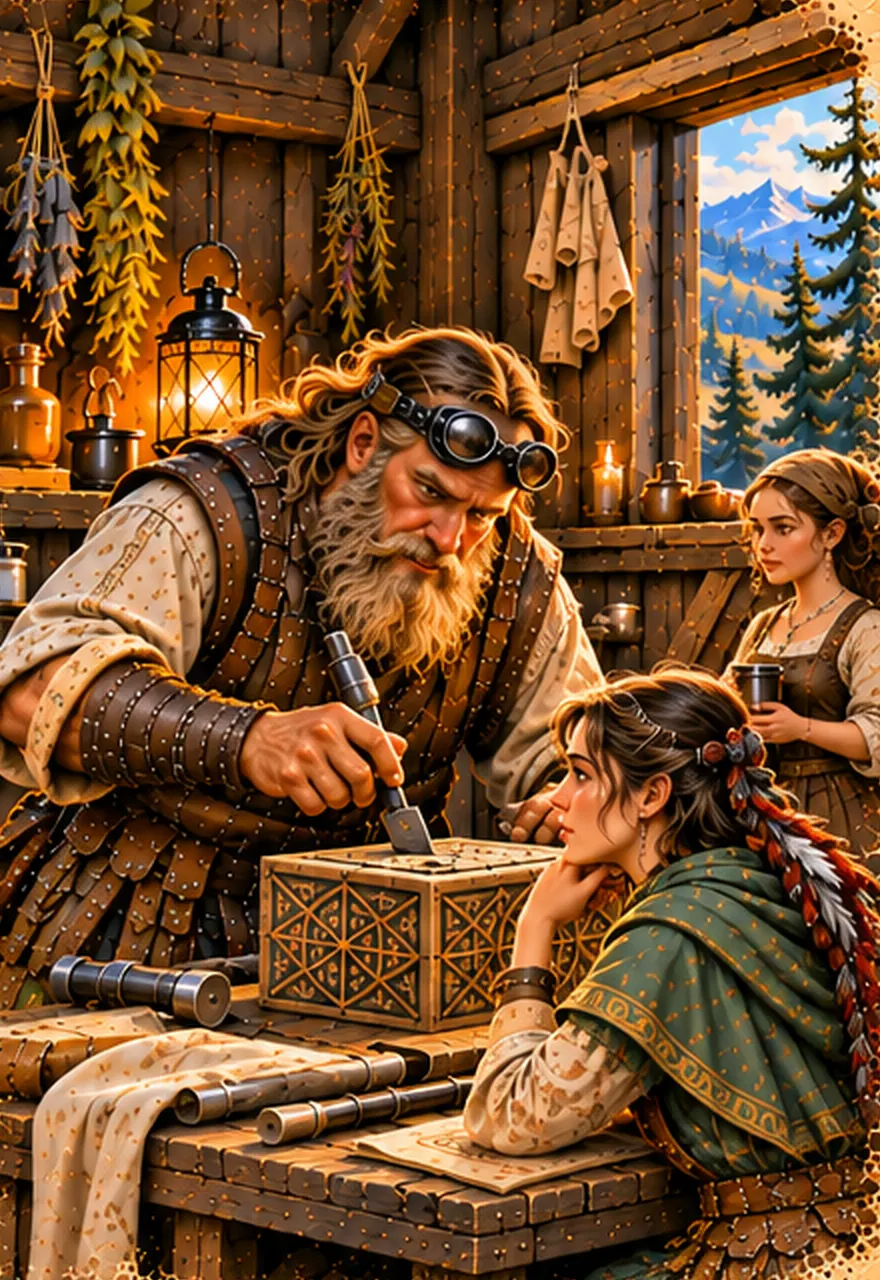
A week spent asking around, buying drinks and listening.
| Looking for | Skill | Difficulty |
|---|---|---|
| Rumours and news | Persuasion or Insight | Easy (9) in a town, Medium (11) at a post or fort |
| A buyer or seller for ordinary goods | Persuasion | Easy (9) in a town, Medium (11) on the frontier |
| A guide, a hireling or a trainer | Persuasion | Medium (11) |
| A teacher for a spell or rune, or a magic-career trainer | Persuasion | Very hard (15), or Hard (13) among the teacher's own people |
| Rare rune materials | Knowledge (Commerce) | Hard (13) |
On a success, the character finds what they were looking for, or a lead to it. A margin of 3 or more finds it on better terms, or finds something extra.
On a failure, the week is spent, and the character can try again next week.
Asking about the Worldsoul is risky in the colonies and the crown's lands. On a failure by 5 or more, word reaches someone who disapproves.
Standing and favours
Favours. Many prices on the frontier are paid in favours: for spells, for runes, for trainers and for help. Note each favour on the character sheet, with the name of the person owed or owing.
Calling in a favour. A favour owed to the character can be called in once, for help that is fair for what was given. A character who refuses to repay a favour owed loses that person's trust, and others who hear of it.
Standing. The GM can note a character's standing with a people, a power or a town: Trusted, Known, or Distrusted. Trusted gives +1 on Persuasion and reaction rolls with that group, and Distrusted −1. Standing changes through what the characters do in play, not through rolls.
Events between adventures
At the end of each downtime period, the GM may roll d100 once for the group, or once for each character, and read the result below. Low rolls are trouble, high rolls are good fortune, and the middle is the ordinary life of the frontier. The GM can also simply choose an event that suits the story.
| d100 | Event |
|---|---|
| 01–02 | Fire. Your lodgings burn. Lose half your coin and goods, unless you spend the first week of the next downtime saving what you can. |
| 03–04 | A raid on the settlement. Each character must fight or flee; the GM runs a short scene, or each character takes d6 damage and loses d3 pieces of goods. |
| 05–06 | Flood. The river rises and the trails close. The next adventure starts a week late, and a week's food is spoiled. |
| 07–08 | Spring fever sweeps the town. Pass Resist (Disease) at Medium, or start the next adventure with 2 Fatigue. |
| 09–10 | Thieves. Something of yours is stolen: a weapon, a tool or d6 pieces. The thief is still in town. |
| 11–12 | A witchfinder arrives and starts asking who has been working the Worldsoul. Anyone with a magic skill must lie low or answer questions. |
| 13–14 | A magistrate's warrant names one of you, rightly or wrongly. A thief-taker is on the way. |
| 15–16 | Someone you owe calls in a favour, now, and it is not a small one. |
| 17–18 | An old enemy has found out where you are. |
| 19–20 | A rival undercuts your trade. Earnings from Working your trade are halved for the rest of this downtime. |
| 21–22 | Bad debts. Someone who owes you money has skipped town. |
| 23–24 | Prices rise: soldiers have bought up the stores. Living costs are doubled for the rest of this downtime. |
| 25–26 | Press gang. Recruiters for a crown or company are taking able bodies, willing or not. Avoid them with Stealth or Persuasion at Medium. |
| 27–28 | A horse, mule or dog of yours goes lame or runs off. |
| 29–30 | A storm wrecks a canoe, a cache or a stretch of trap line. |
| 31–32 | Strange beasts have been seen near the stetlement where the Worldsoul runs strong. People are frightened, and look to you. |
| 33–34 | A quarrel with a local turns ugly. One of your standings drops to Distrusted unless you make amends. |
| 35–36 | A companion of yours, or an important local figure, falls sick and needs nursing for a week. |
| 37–38 | Wolves, or worse, take livestock nearby. The owners will pay well for whoever stops it. |
| 39–40 | A preacher denounces newcomers, elves or magic from the meeting-house steps, and the town listens. |

| d100 | Event |
|---|---|
| 41–42 | Rumours of war: militia muster in the square, and everyone is asked whose side they are on. |
| 43–44 | A seeker just off the boat attaches themselves to you, sure you can teach them the Worldsoul. |
| 45–46 | A boat-clan moors nearby for a few days. They will carry goods, messages or people anywhere on the river, for a price. |
| 47–48 | A surveyor offers good pay for a guide into the back country, no questions asked. |
| 49–50 | A travelling show comes to town: acrobats, a fiddler and a man selling cures. |
| 51–52 | News from the river valley: a skirmish between colonial militia and the traders' soldiers. Nobody agrees who fired first. |
| 53–54 | A letter arrives from home, or from an old companion, with news good or bad. |
| 55–58 | A quiet season. Nothing unusual happens. |
| 59–60 | A wedding, a funeral or a council in town. Everyone is there, and everyone talks. |
| 61–62 | A stranger asks after one of you by name, and leaves before you can find out why. |
| 63–64 | A League envoy passes through on the way to the forts, and wants to hear what you have seen. |
| 65–66 | A local asks for help with a small matter, for a small reward. |
| 67–68 | A hunter brings in a beast of the Worldsoul nobody has seen before, and wants it identified. |
| 69–70 | An antiquarian is hiring hands for a dig at an old earthwork. The river elves have warned everyone off. |
| 71–72 | A trading post needs an escort for a fur convoy downriver. |
| 73–74 | A rune device turns up for sale, cheap. It may be stolen, and it may not be what the seller says. |
| d100 | Event |
|---|---|
| 75–76 | A runewright is in town, and will take one commission, for a price. |
| 77–78 | A Keeper or a Hearthwarden offers to teach a spell, in return for a favour. |
| 79–80 | You hear a rumour worth following: the GM gives one true lead. |
| 81–82 | You hear two rumours. One is true. |
| 83–84 | A good harvest, or a good season on the trap lines. Earnings this downtime are increased by half. |
| 85–86 | A good bargain: buy one item at half price, or sell one at double. |
| 87–88 | A merchant company factor wants to hire you, and pays in advance: d6 pieces. |
| 89–90 | Someone owes you a favour for something you did. |
| 91–92 | Your standing improves with one people or town of your choice, to Trusted. |
| 93–94 | A local healer tends your hurts: one week of recovery is free. |
| 95–96 | A trainer arrives who can teach a new career, and is willing. |
| 97–98 | A windfall: d6 × 2 pieces from an old debt repaid, a lucky find or an inheritance. |
| 99–00 | A stroke of luck: a valuable contact, a rare rune material, or a map to something worth finding. |